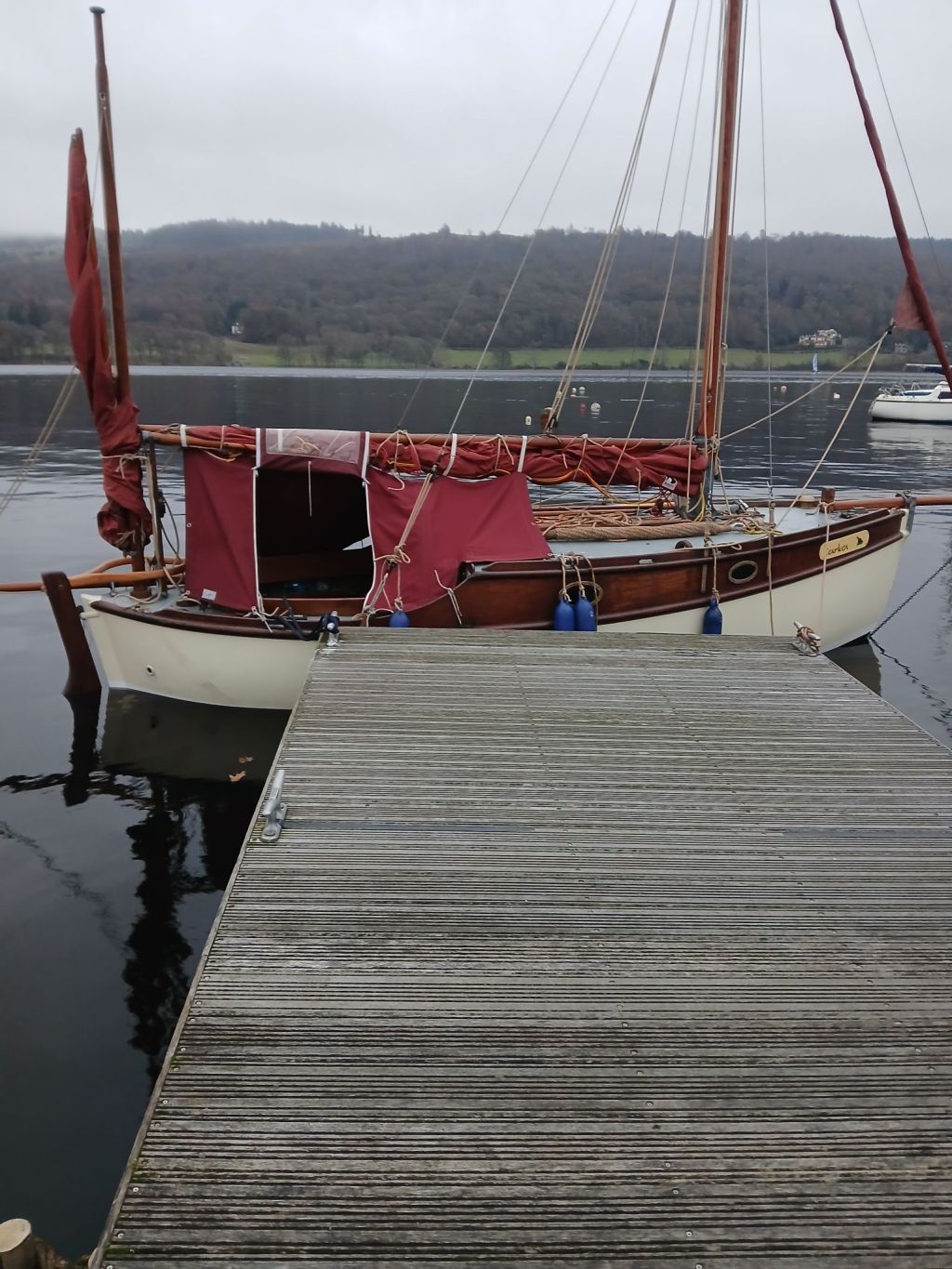
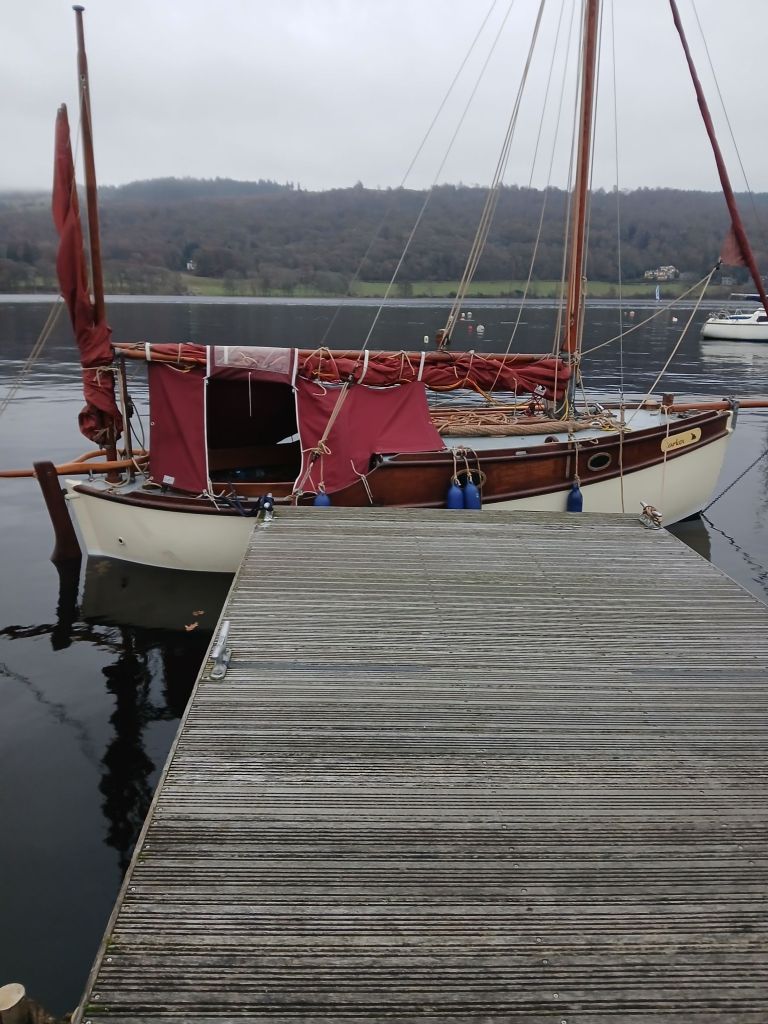
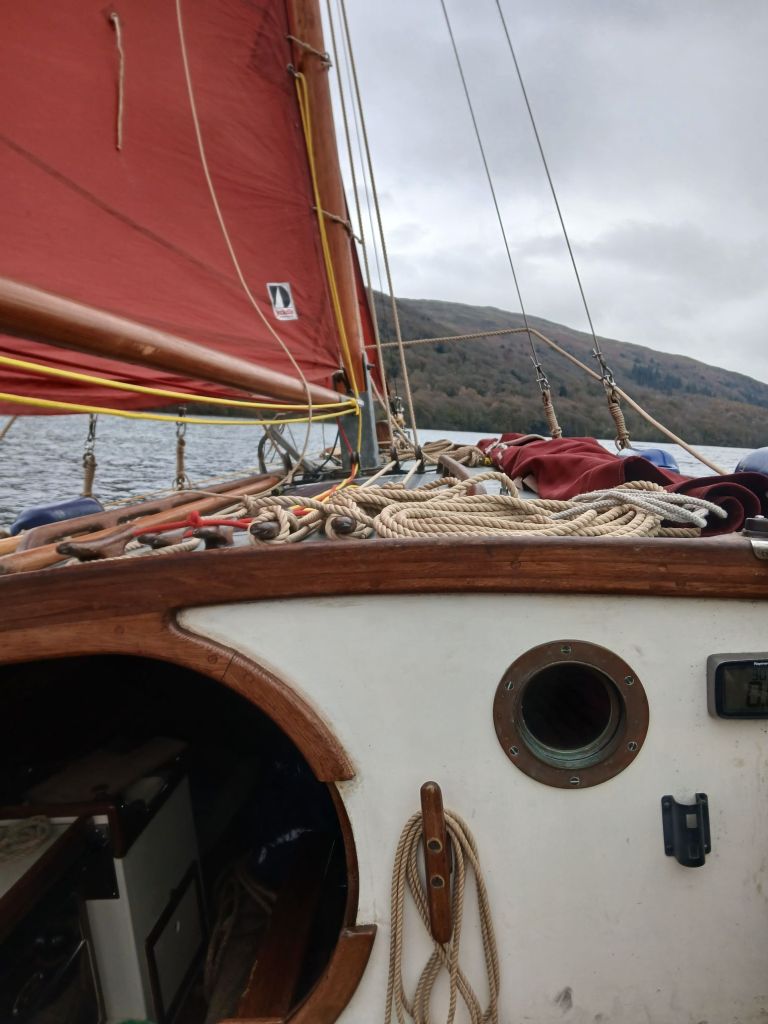
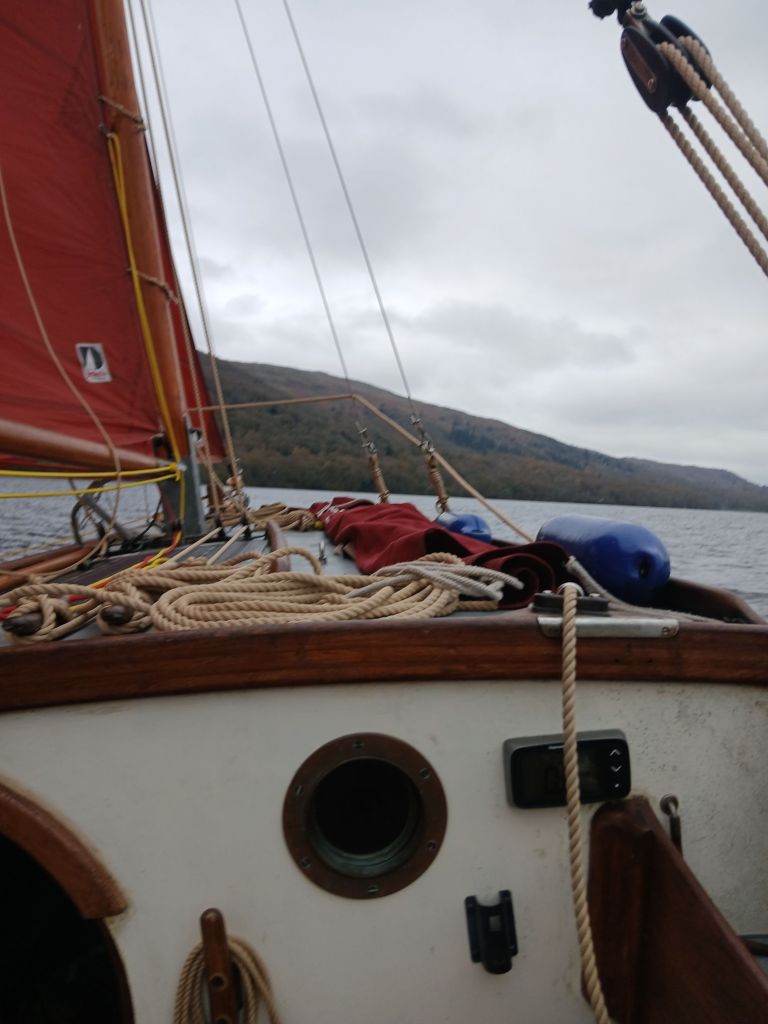
Visited Coniston Sailing Club this weekend for the last sail of the season. Chance to try out a different slipway. Had a good sail there but because I didn’t want to hold up any of the other crews launching that day I went back of the queue. This meant added delays getting started so my sail was limited to just a couple of hours.
Apologies the the Coniston Sailing Club, I did have a great time it’s certainly a very good and lively club and will visit again.
This post is however more about how I can improve the launching and recovering with my rig. It’s been evolving and there’s still some way to go before I get this nailed.

The method I have been using comprises lowering the rig down the slip using the electric winch. One of the drawbacks with this method is it is very slow when compared to the roping out method employed by lighter craft that can effectively be hand launched. But with a 2000kg rig the situation becomes uncontrollable without using some sort of braking mechanism. Even with belaying tackle such as the figure 8 device it’s a case of several people manning the rope, and 1 or 2 people in the water guiding the trailer, managing the safety rope, chain etc.
The electric winch has two methods for switching, using a fixed cable electric rocker switch, or remote control handsets. The handsets are fine in theory I can go down the slipway with the trailer lowering away at the same time. In practice the remotes seem to have an issue firstly they cut out frequently due to presumably poor signal or interference, and secondly they overrun, i.e. if one small increment is needed I bump the button once but the response from the winch is a longer amount of draw which is an issue if I am trying to align the trailer hitch with the towball on the car.
Ideally I need a braking mechanism at the trailer end, and I’m hoping this old braking winch that I found might be the answer.
This is strictly old school technology and it is heavy but it is large enough to carry sufficient high BS rope to execute a launch. At 30M capacity this would even provide enough line to be able to double up using a snatch block and this would effectively provide a low gear potentially allowing a manual retrieve, always useful to have a manual backup, and helping with hitch alignment providing a fine tune for the last few cm.

The brake winch is a 1950s industrial winch which comprises a 9inch diameter cast iron brake wheel covered by a metal strap with a proper brake lining. The actuator is a 16in lever that connects with the brake band and a couple of springs to offset the weight of the lever so the brake is just coming on under its own weight. The spool appears to be cast iron of about three inch diameter and the main drive sprocket also looks to be cast iron 9in diameter. The lock is a free standing ratchet arm situated on top of the main gear wheel that depending which side it is on allows rotation one way but not the other. The max braking load is 1400lbs which is appox 0.5ton which should easily hold the rig on all the slipway I’ll be using. I always remember the load calculation from an extreme example, a 2ton rig on a 30 degree slope produces a load of 1ton. Most slips are 15 degrees or less, and taking friction into account the load should always be a lot less than 0.5ton. If a retrieval is needed then by doubling or trebling up the extra load to overcome friction going up the ramp should be cancelled out.
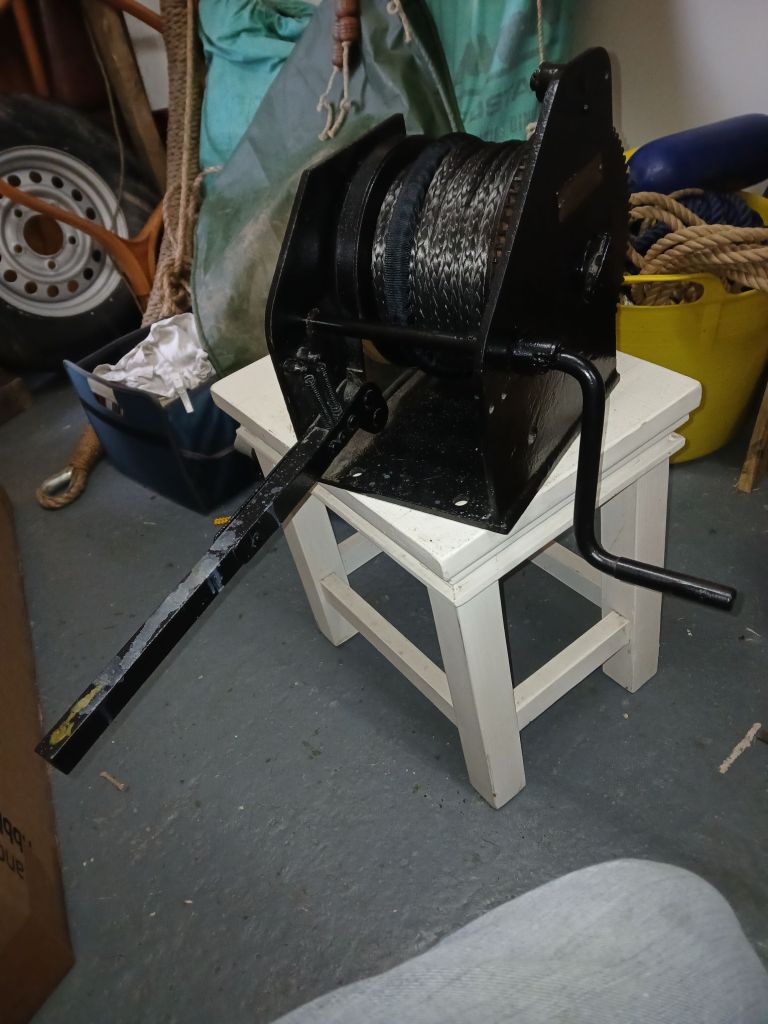
I’ve tested it out with light loads and it certainly provides the braking action I’m looking for. Here in the photo I have loosely spooled the 30M 10mm dyneema and it fits comfortably. I’ll need to respool it under load to make sure it is seating neatly before a live test.
I’m thinking the launch procedure might go something like this: start with the car with trailer on the ramp ready to launch. Have a heavy safety rope linking car and trailer at all times. Attach the line of the brake winch cable from the trailer to a strong point on the car. Attach the line from the electric winch from the car to a strong point on the trailer. Set the electric winch to freespool, set the brake winch to lock with the ratchet while unhitching the trailer. With brake applied, which will be the default, unlock the brake winch by swapping the ratchet arm to the other side. Using the brake lever lift to ease the brake off and allow the rig to descend under its own gravity, guide down the ramp. Release the lever to slow down, push down on the lever to stop, and throw the ratchet over to lock. At the bottom of the ramp float boat off trailer and tie off to suitable fixed point. Return to the car and reengage the electric winch. Winch in using the cable swich to retrieve the trailer all the way up the ramp and rehitch to car.
In the situation the electric winch fails for any reason the brake winch can be used to winch in, certainly for a launch the trailer is unladen on the way back up the ramp. If it a retrieval then the rig might be too heavy to operate safely, but possibly the cable could be doubled up or even trebled to improve gearing to manually retrieve the rig. Failing that it can be towed out using the car on any of the 3 lines attached (brake cable, elec winch cable, safetly rope).
There’s probably some practice needed and problems to figure out. Well see how this goes. I have a few trailer jobs to do over the winter so amongst this will be a build for a mount for the brake winch.
The next big job on the trailer will be to shorten it somewhat but at the same time provide some additional support for the boat overhang – currently the rear keel roller is about three feet from the stern. Moving to this trailer, getting the keel roller set up and building that big protective Vee on the back was last winters project. This winter I’m using the knowledge I’ve gained from this year’s short sailing season to further refine the trailer set up. So here is a short list of jobs:
- Shorten trailer by about 4 feet
- Make a removable beam across the new trailer ends to support the keel during road transportation
- Refit attachments for docking arms
- Add strengthening to the roller posts to resist sideways pressure
- Build mount for brake winch
- Service hubs
- Fit hub flushing kit
- Fit new bellows to drawbar
 Small Boat Voyages
Leave a comment