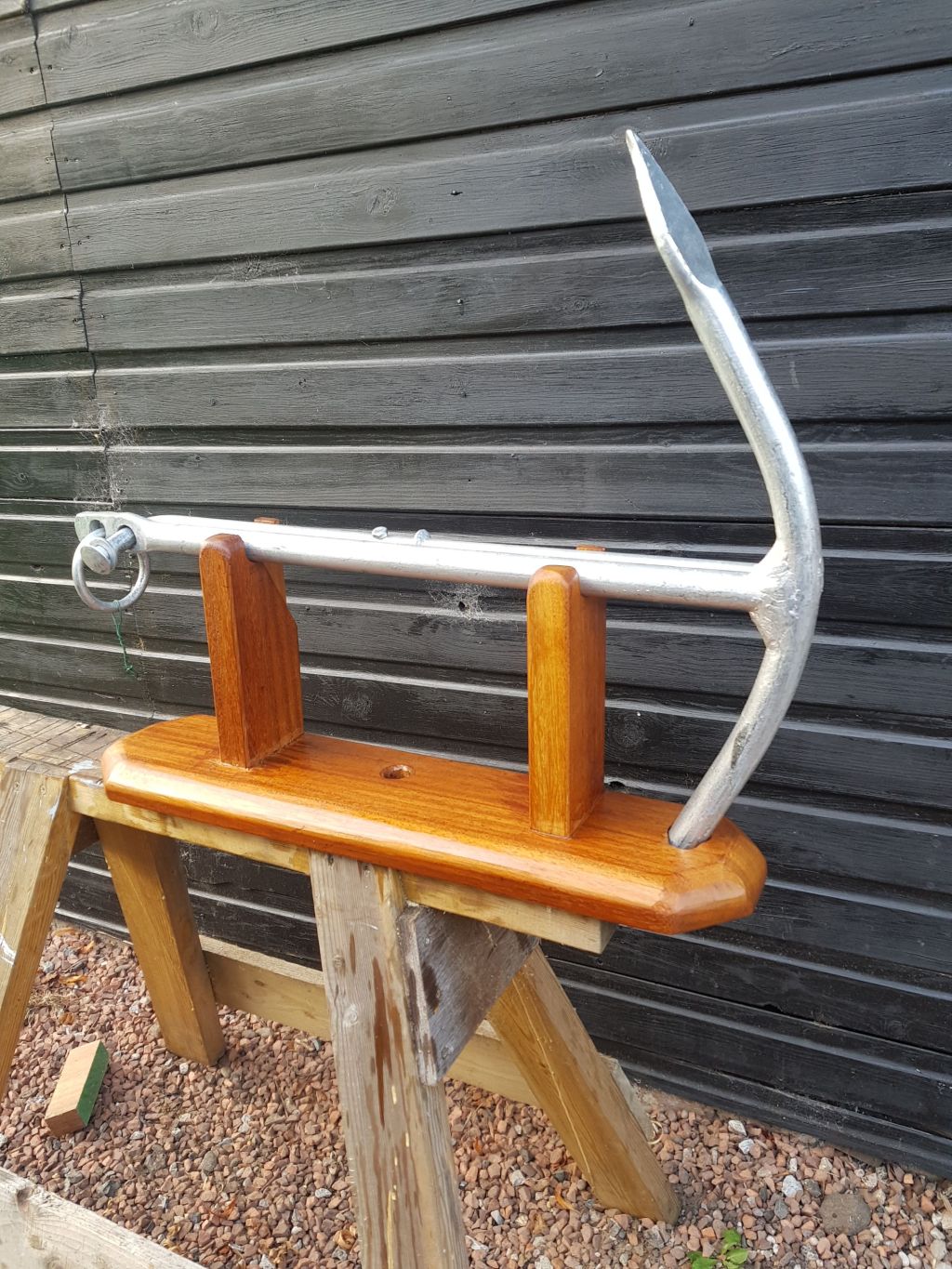
This post documents the building of a cradle to support a new second anchor for Tarka. The main anchor is a 7.5 kg bruce pattern attached to 50ft of 8mm chain. The bruce is good for mud and sand. This second anchor, a 10kg admiralty bay palm, will be better for rocky and or weedy situations. I’ve always carried a second anchor, either a 7kg folding grapnel, or one that I’m not too sure about, but I think it could be a brittany design. Both of these had about 12ft chain but neither really gave me much confidence. The folding grapnels I felt woukd too easily collapse. They are ok for a pram dinghy or inflatable but a bit undersized for Tarka and in my mind unreliable.
So why a 10kg admiralty? The admiralty or fisherman is an iconic and age old design, well recognised for its holding power and makes a great alternative to the bruce in some situations. The 10kg figure I came up with because its the nearest to the old formula: 1lb for every foot of boat, which is exactly half way between 8kg if you calculate it using hull length, and 12kg if you include bowsprit and bunkin.


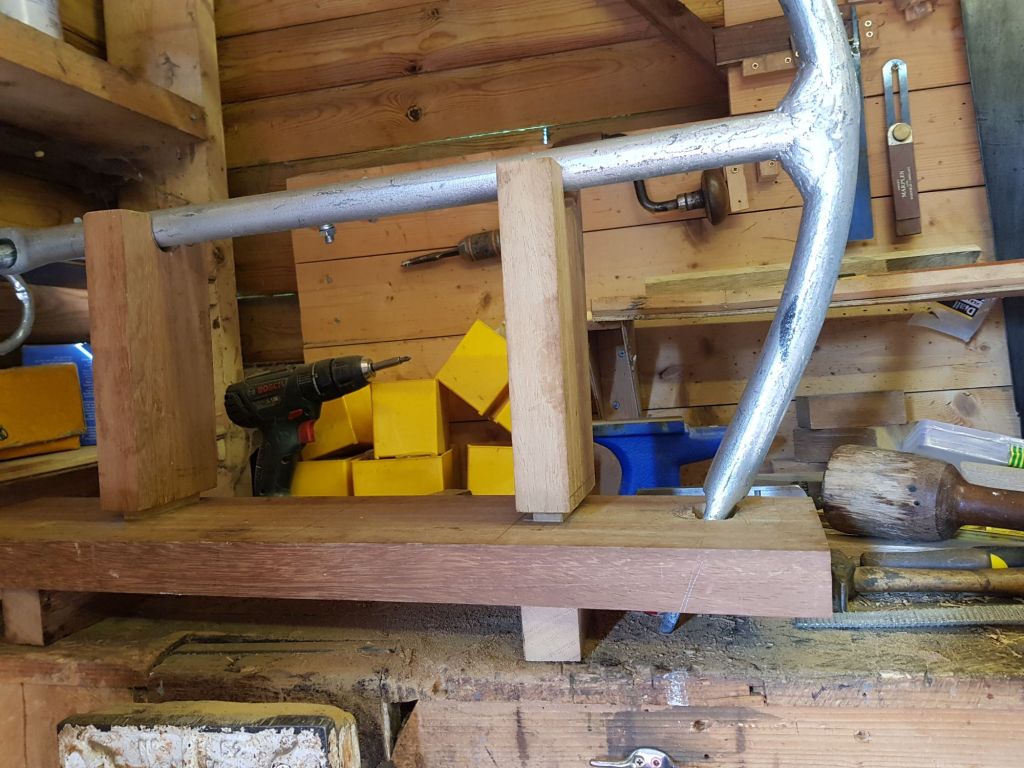
I started with a nice thick piece of iroko to build the anchor bearers. I’m starting with two 4in square blocks and proceeded to shape them out to receive the main bar and folded cross bar.


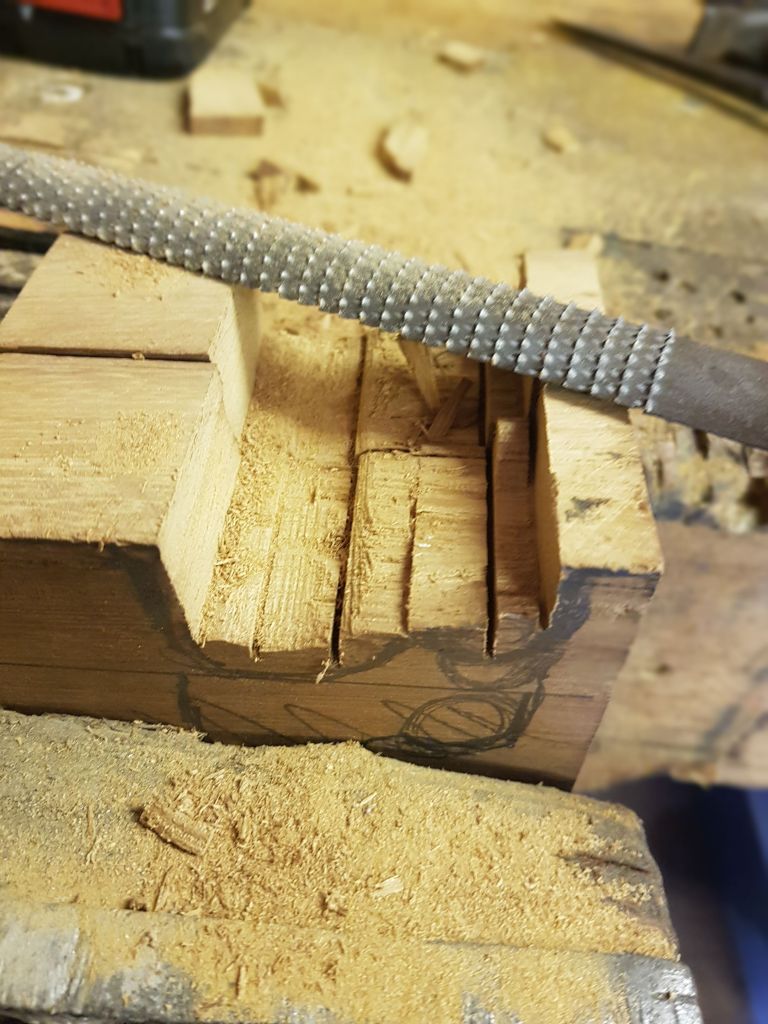
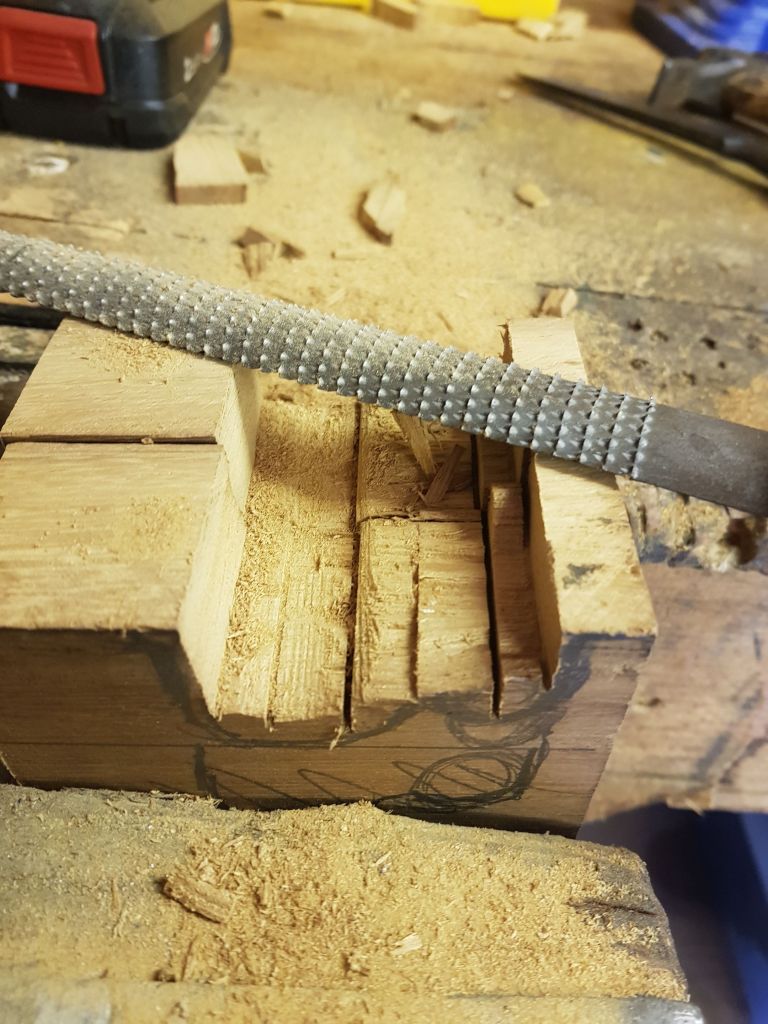
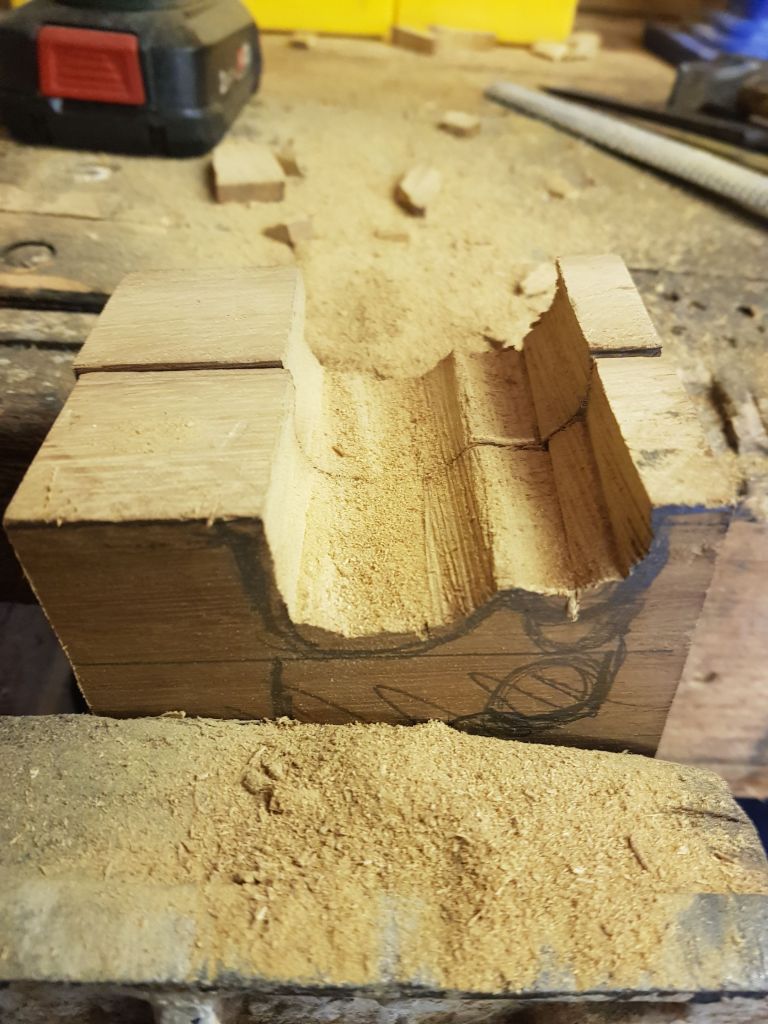
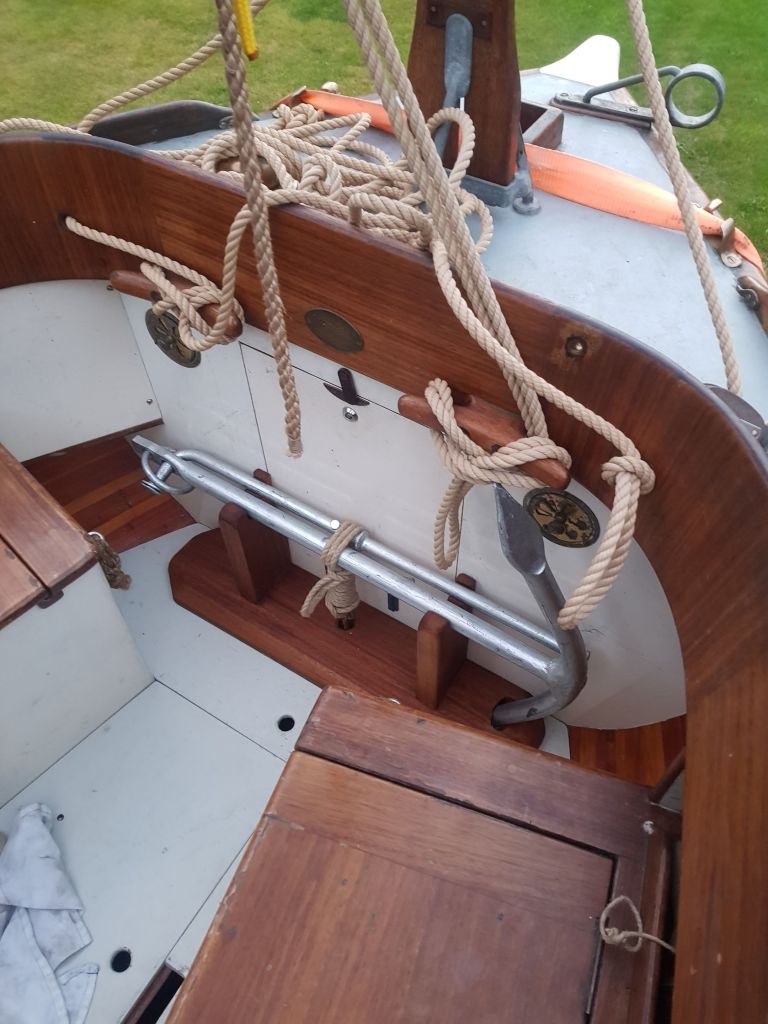
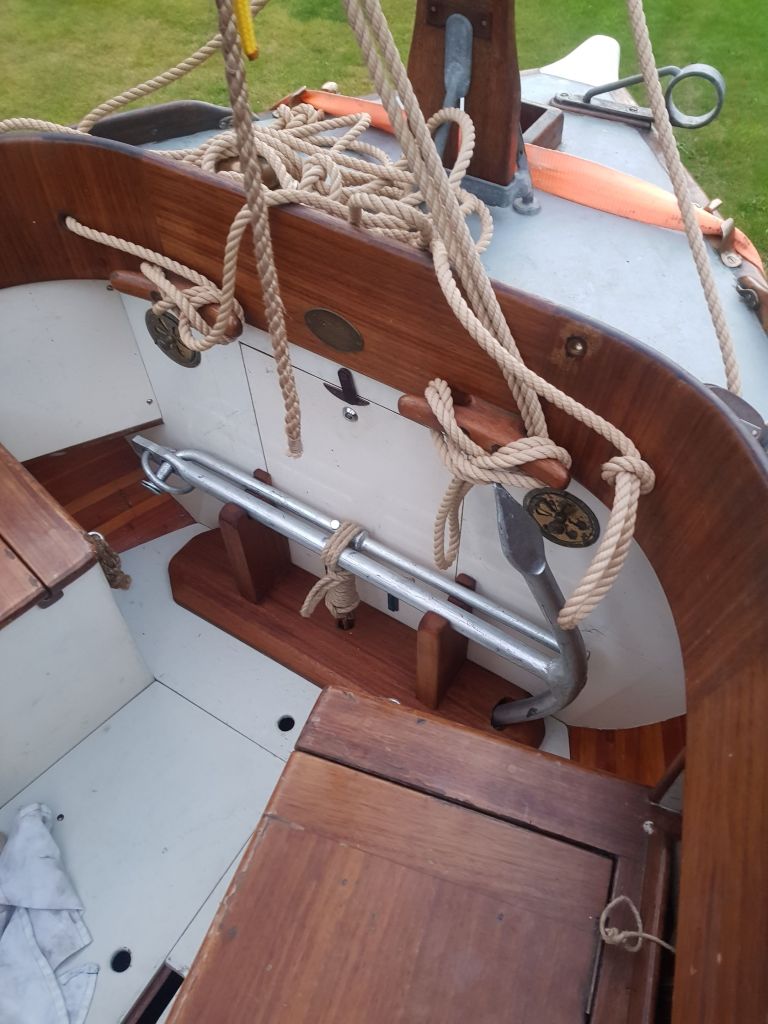
As a first stab at creating bearers I think I managed to get the right shape to hold the anchor, but the bearers seemed far too low down when I tried it for size in the boat, the lower anchor prong ended up resting on the hull, which I cannot allow to happen because of the risk that it could damage the inner wooden strips forming the hull if the anchor moved around which is likely to happen while sailing, or even while being transported on the trailer.
In version 2 I’m making the bearers much taller and this will keep the anchor sufficiently high enough to avoid touching the hull.
To support the bearers I’m joining them to a horizontal peice with mortice and tenon joints which will be strong enough to hold the bearers upright and prevent the anchor from moving around.

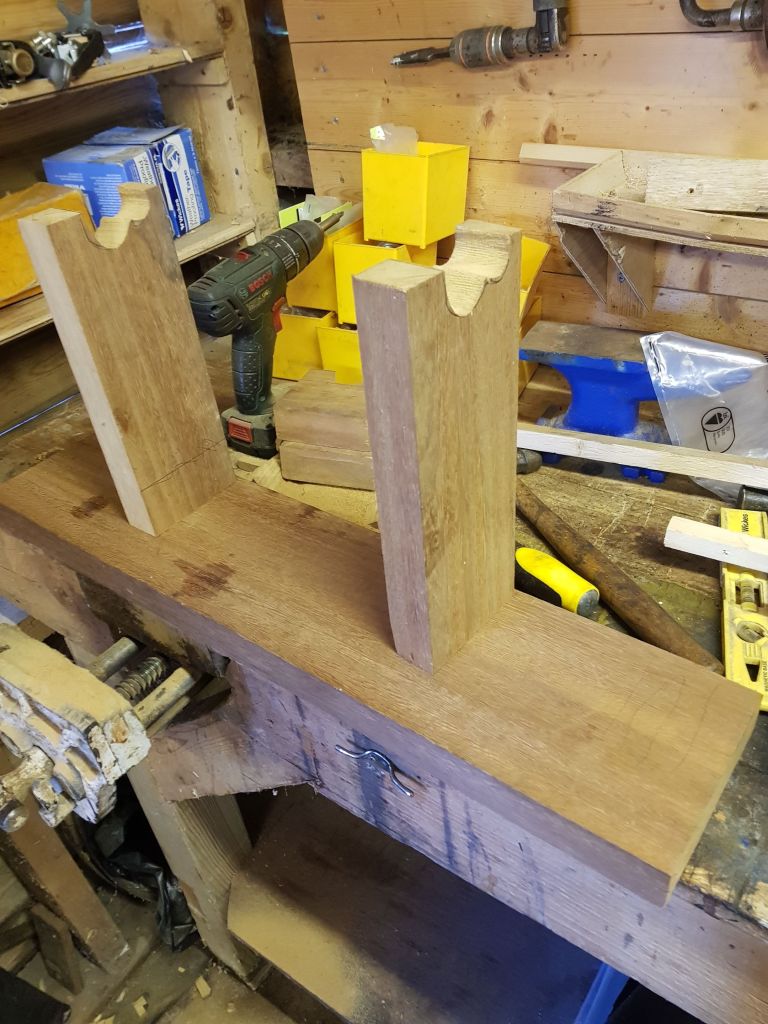
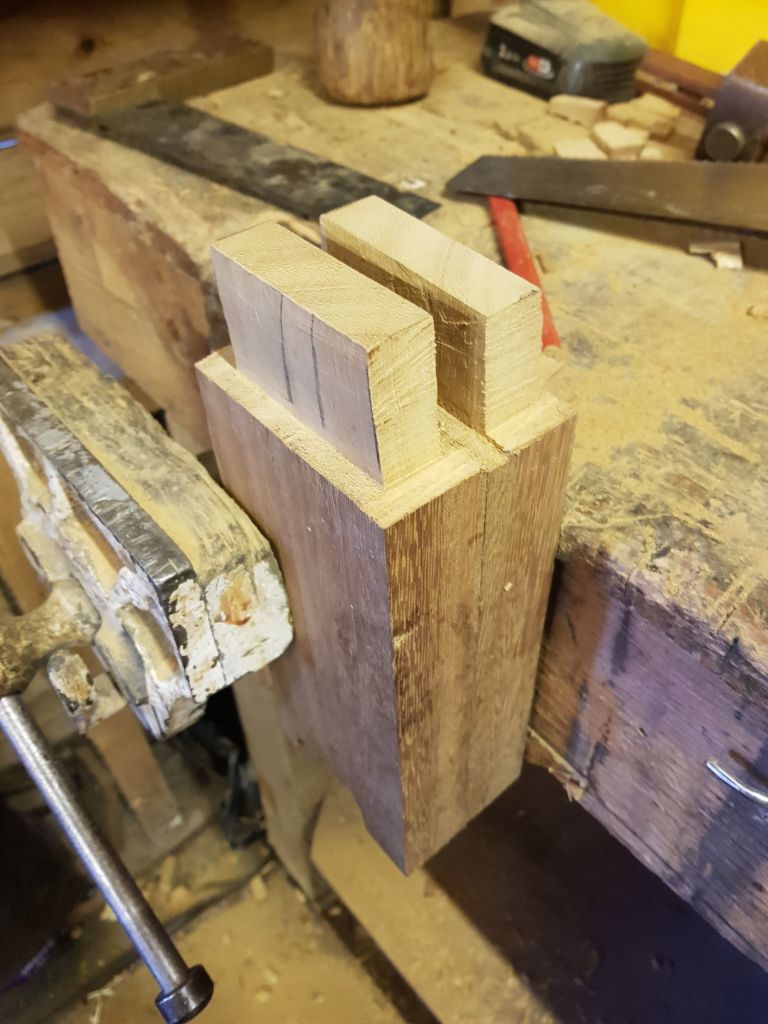
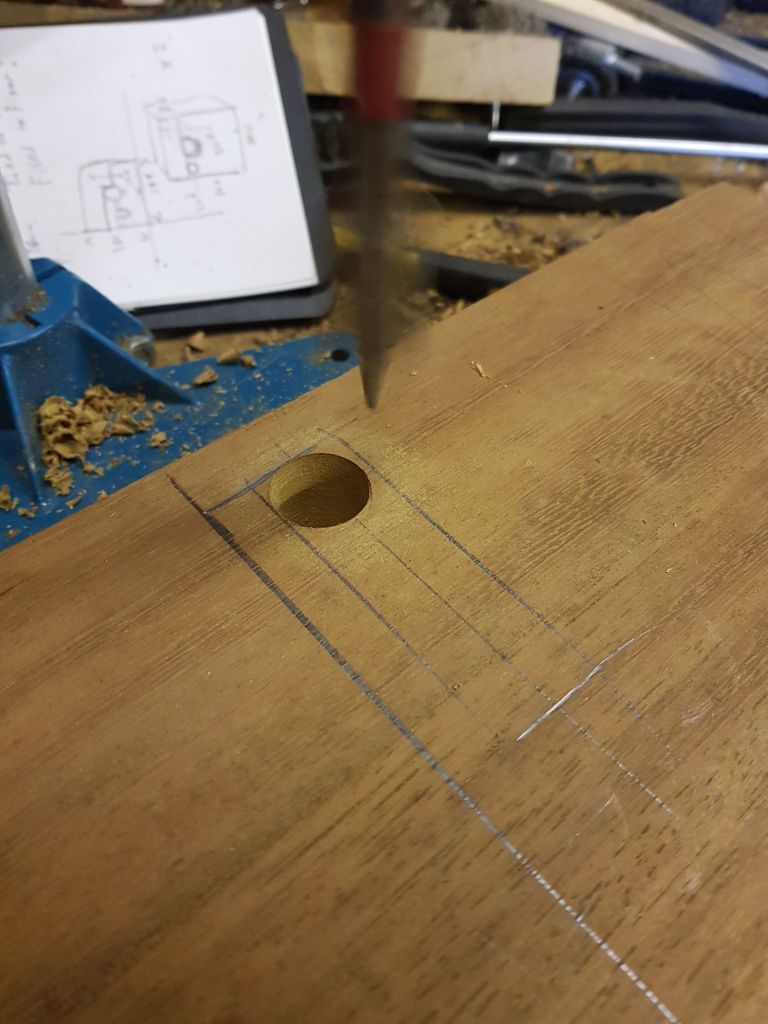
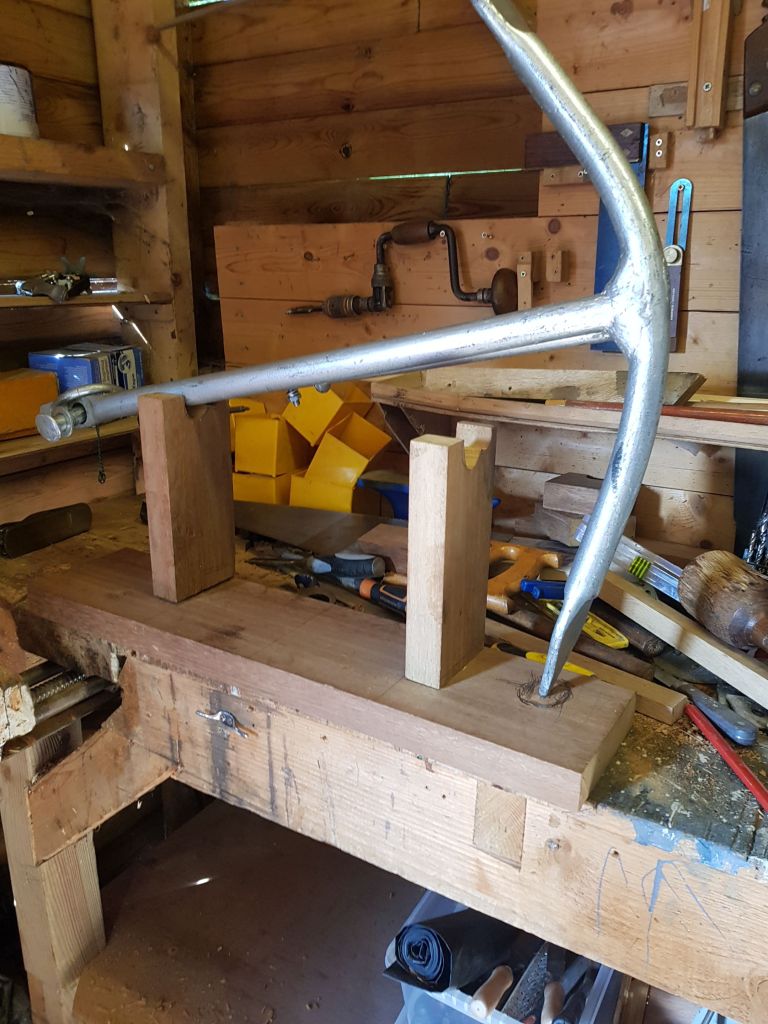
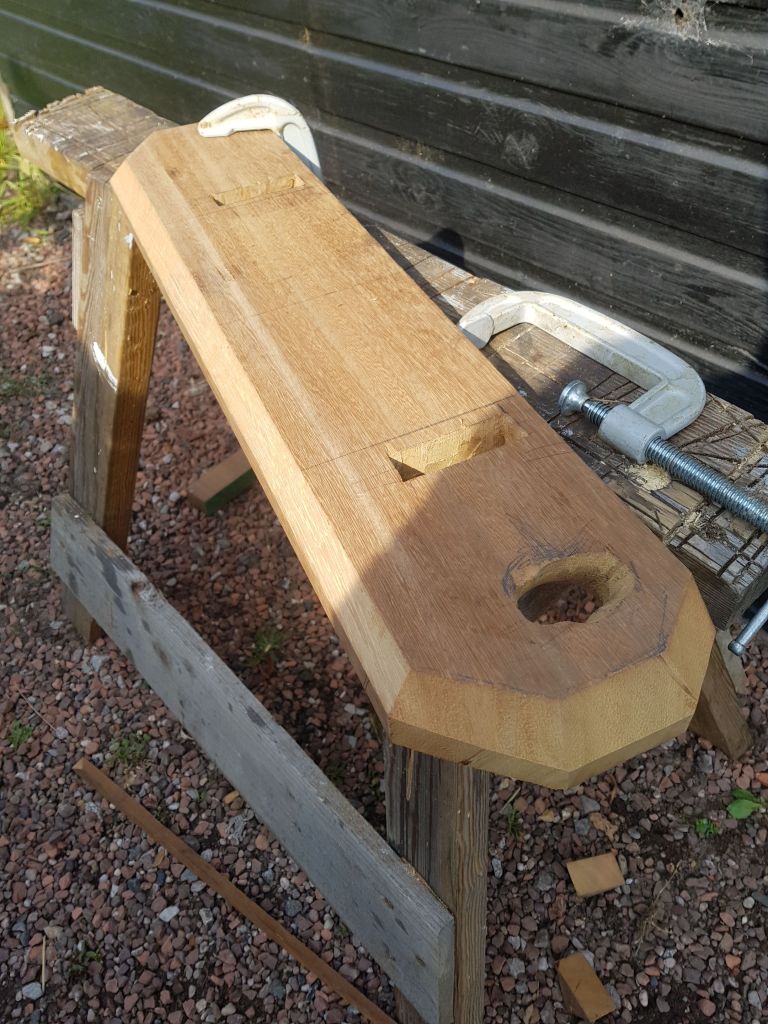
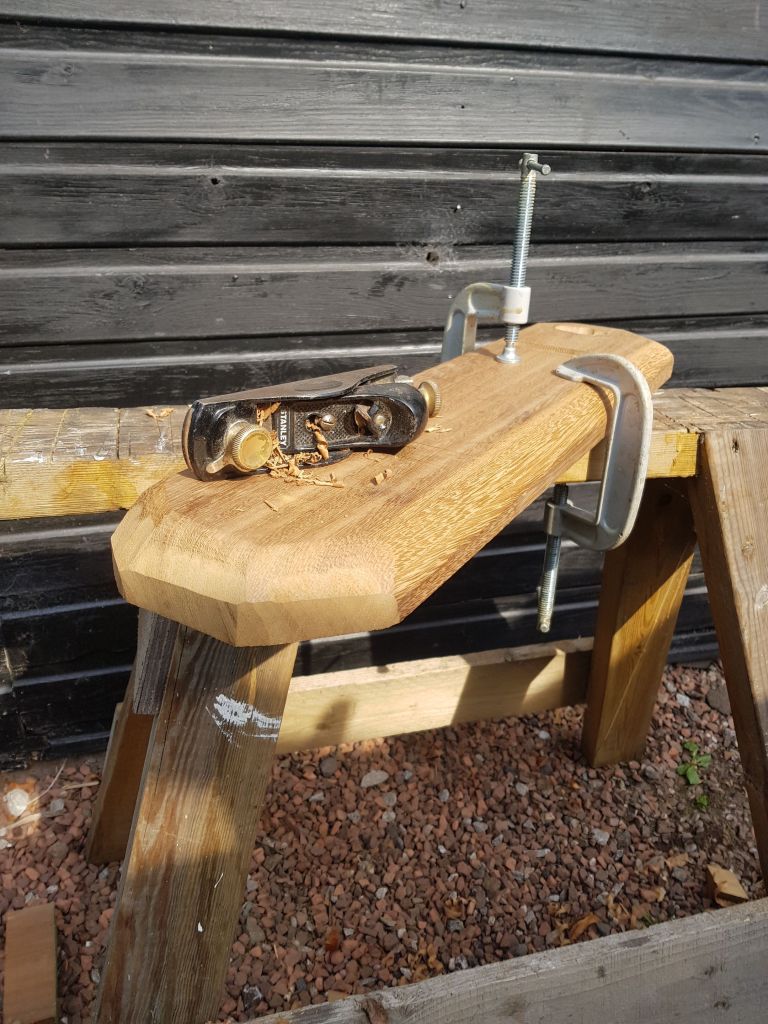
One small incision in the floor is necessary to accommodate the spade of the lower prong. As work progresses I’m thinking of a way to hold the entire unit secure along with the anchor.
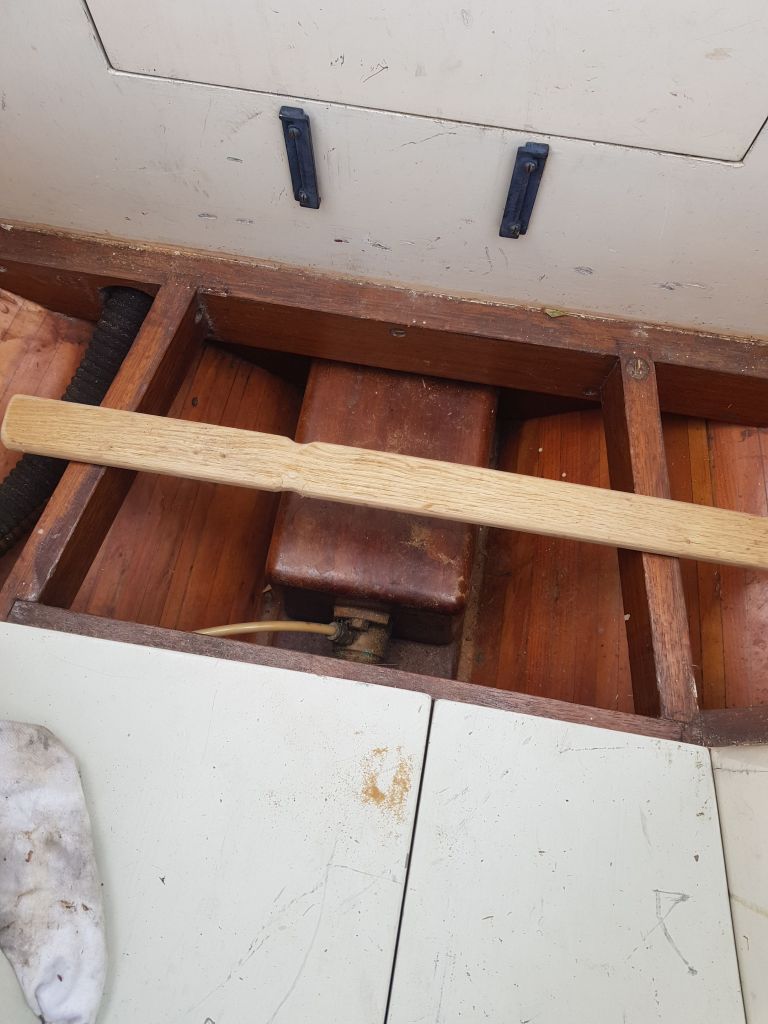
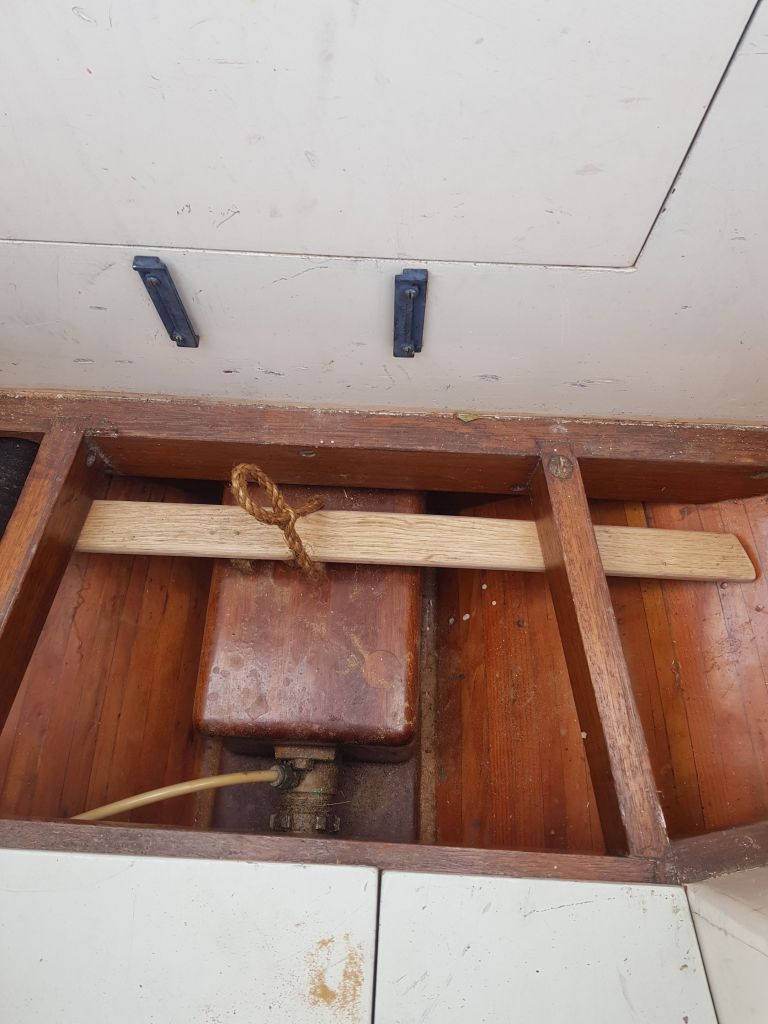

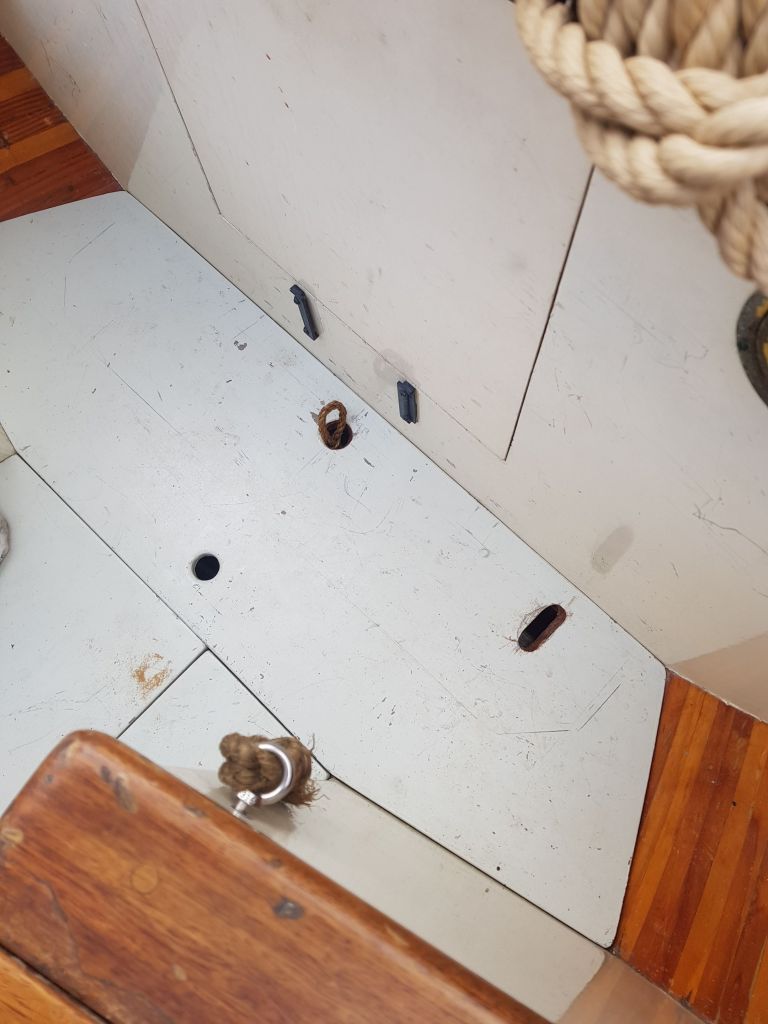
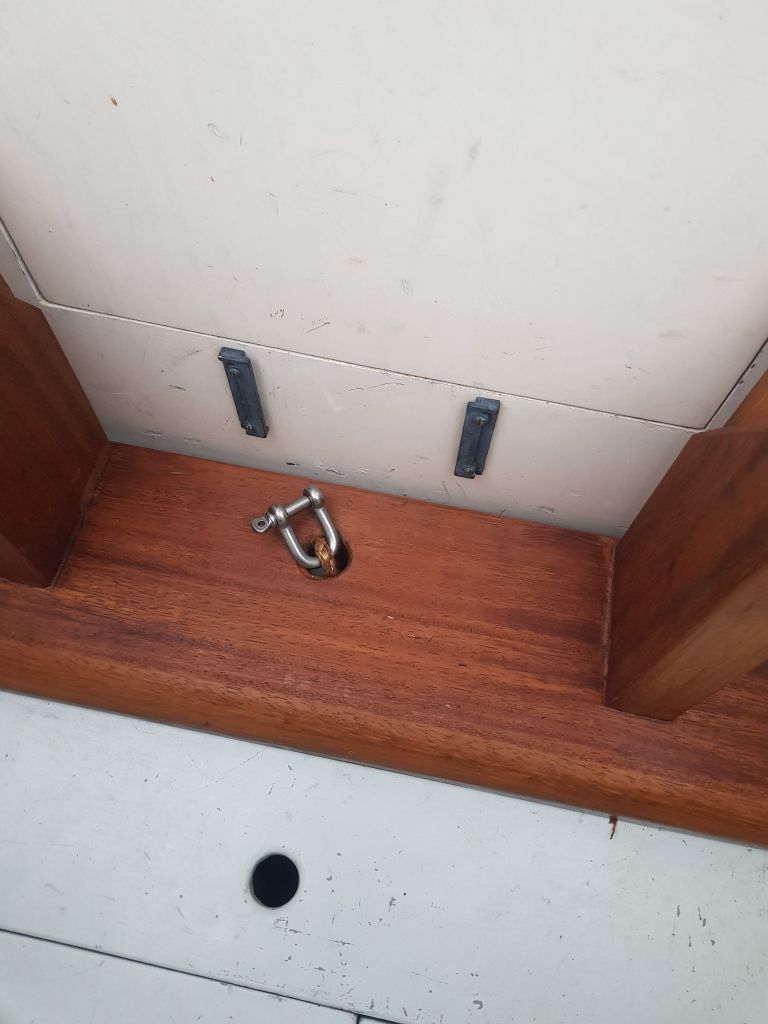
Inspiration arrived! Without altering any of the woodwork on the boat itself, and with only the addition of a 25mm hole in the floor panel, an oak brace runs underneath the frame passing through a loop of rope. The then loop passes through the 25mm hole in the floor and presents itself as an eye through which a shackle or some other fixing can be added. Onto that fixing a lashing can be made over the anchor shaft to hold the entire assembly secure down to the frame of the boat.
And so onto the finishing touches. Rounding and remaining corners and edges to prevent snagging and chafing any rigging. Final cleanup with sandpaper and a first coat of linseed oil mixed with white spirit.
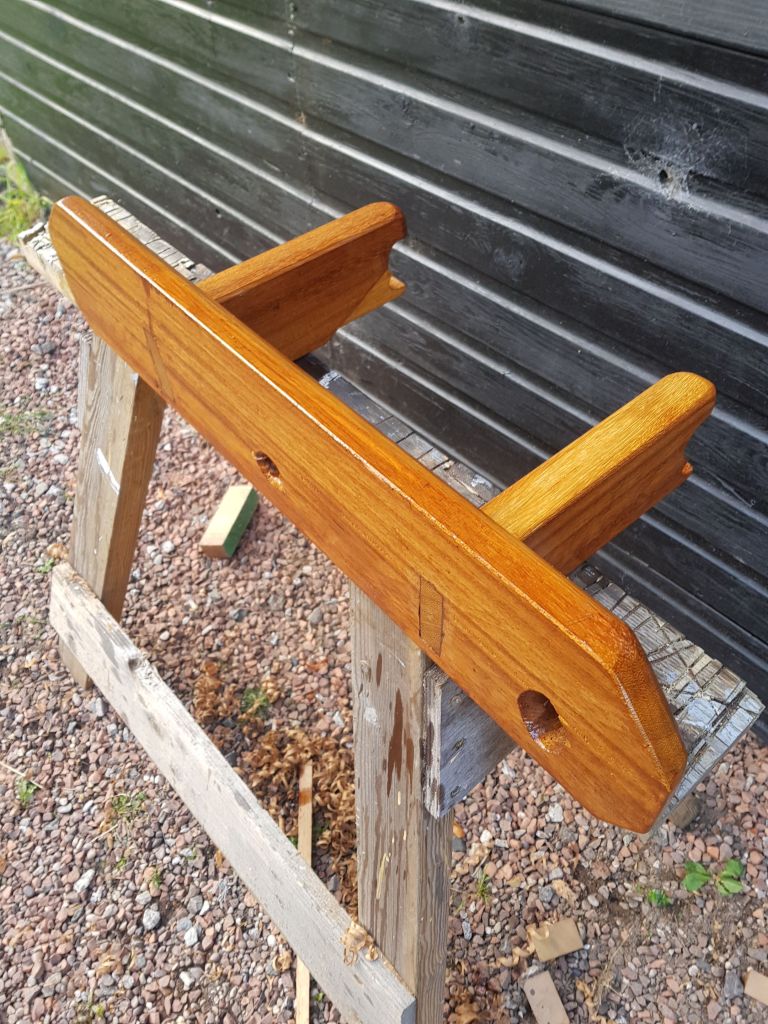
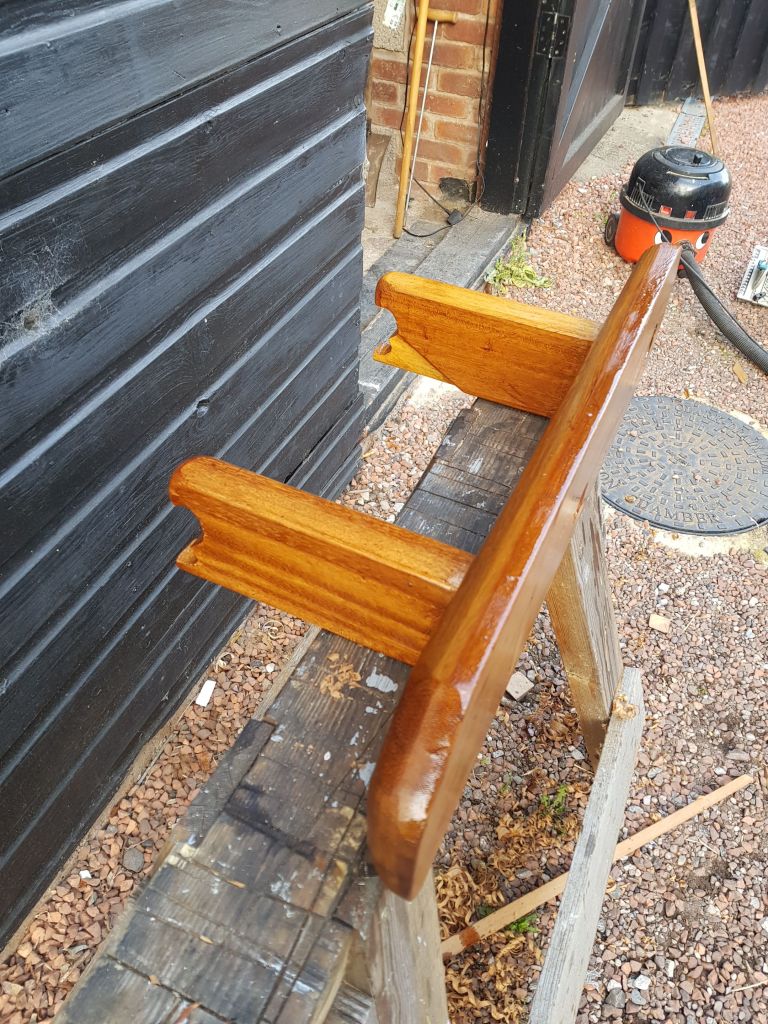
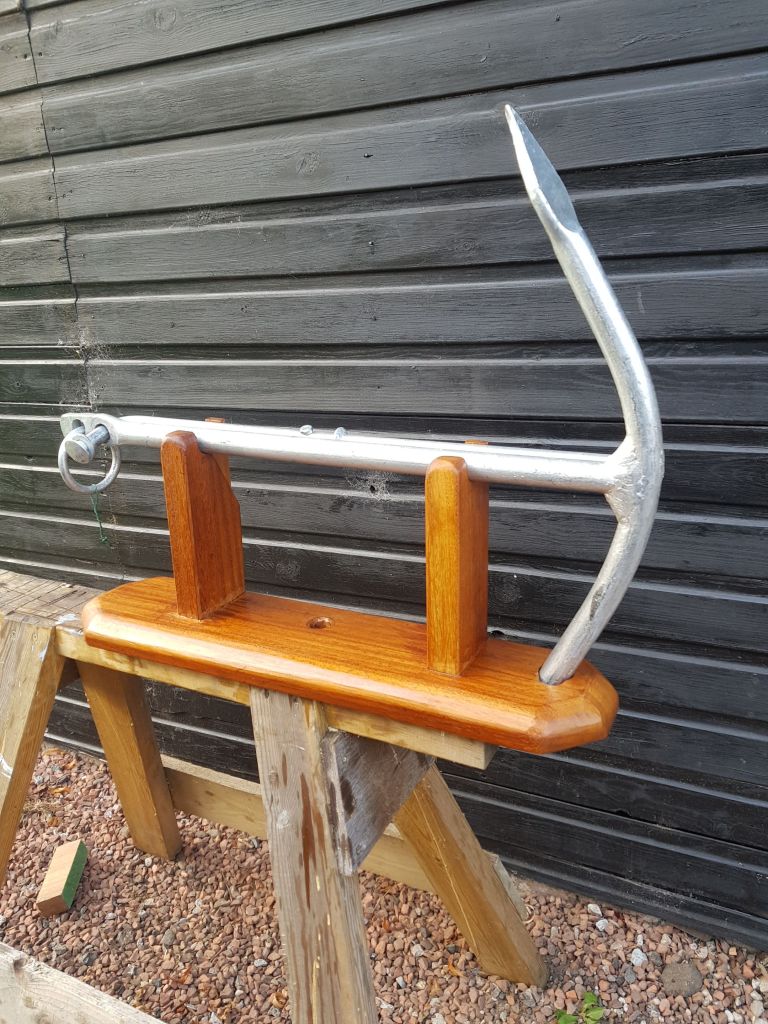
I’ll be the first to admit that my anchor cradle is no Chippendale, far from it, though its simplicity and form dispays the beauty of the wood even though its been created by an untrained diy enthusiast at best. The design looks purposeful and follows the aestetics of the Sea Otter, simplicity of design through evolution from initial imagining through to finished product.


 Small Boat Voyages
Leave a comment