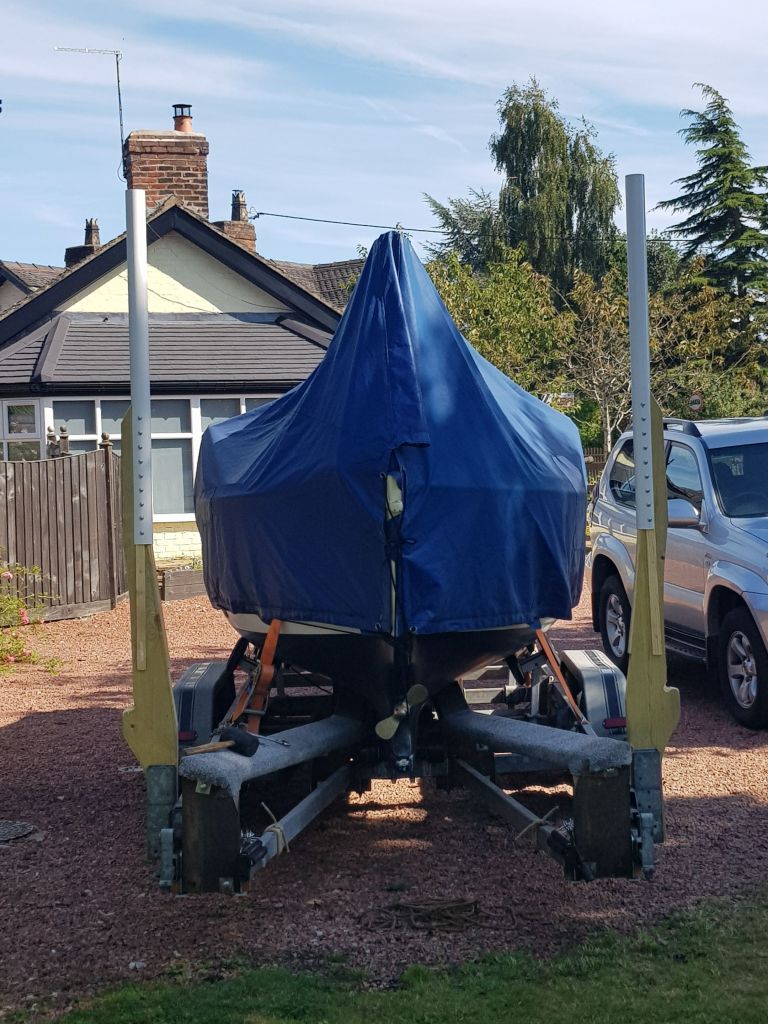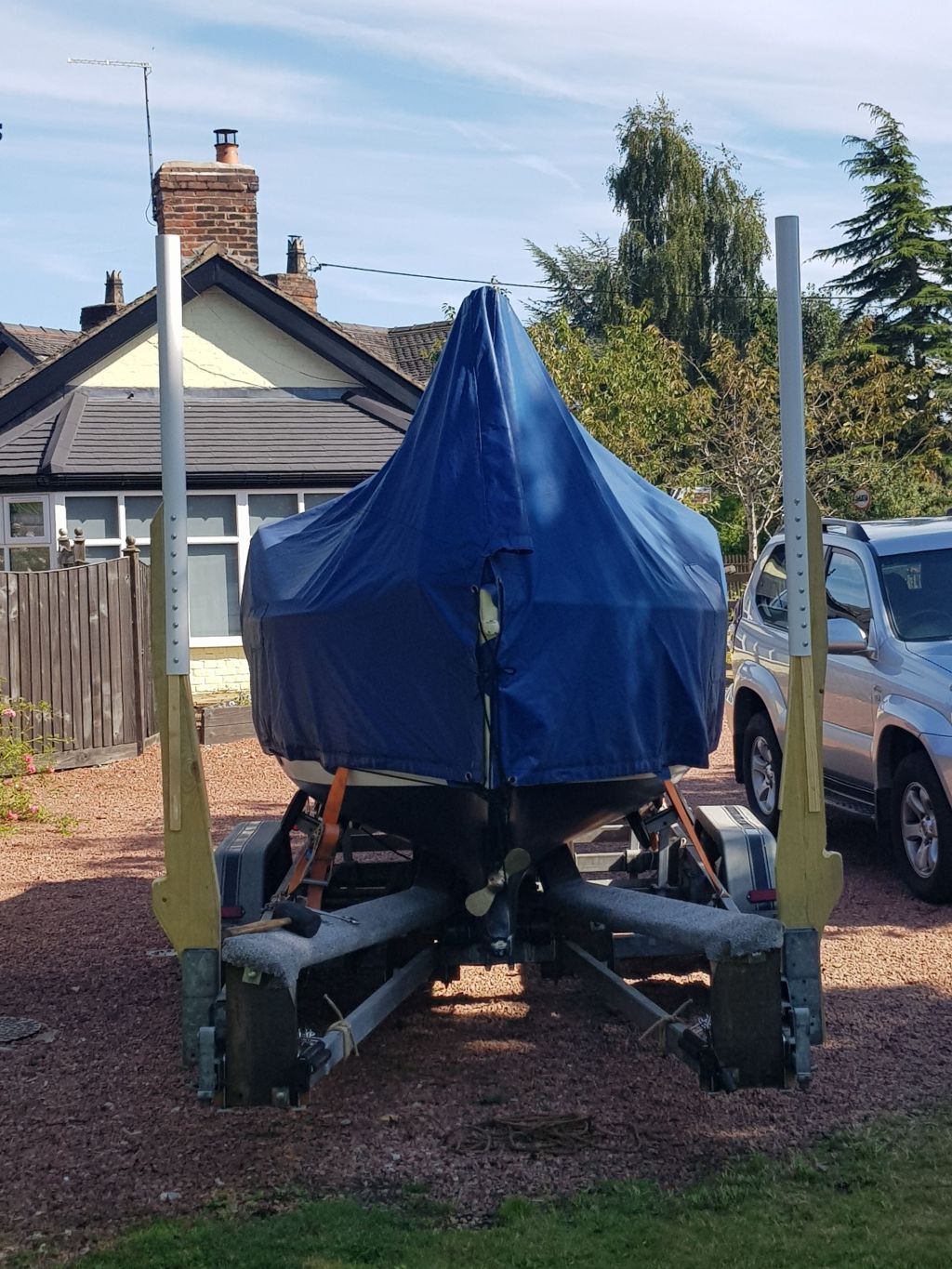
Docking Arms

Considering the roughness of the sea at Meols the other day has given me some ideas about adding some extra control to keep the boat oriented in the best way possible.

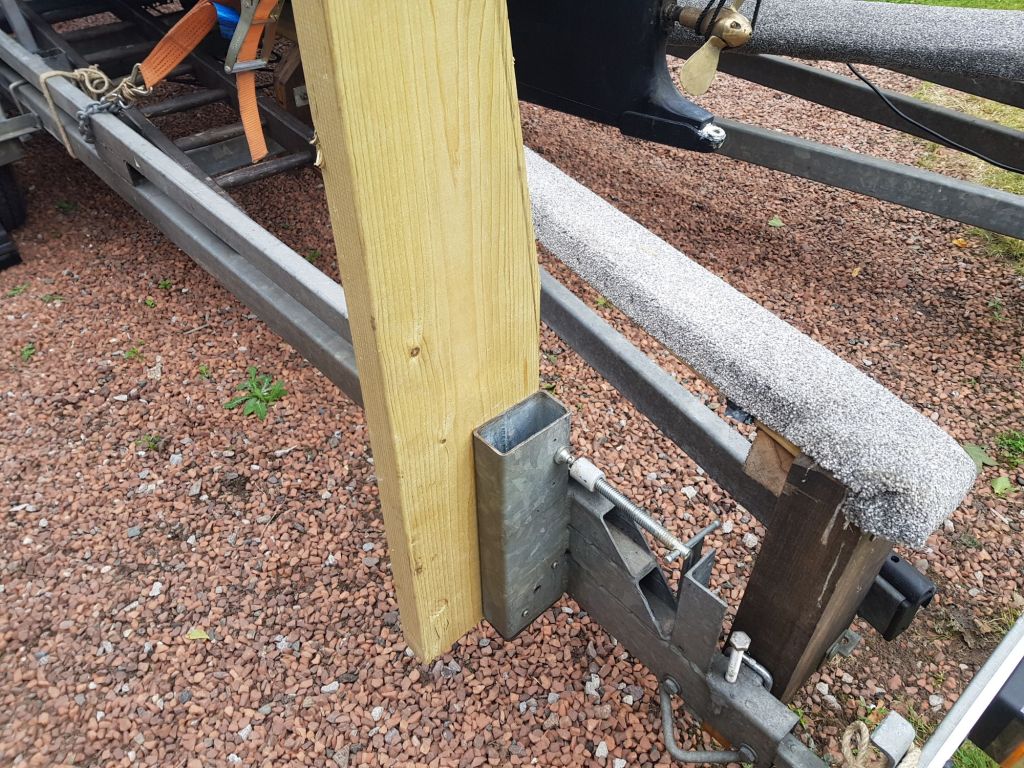
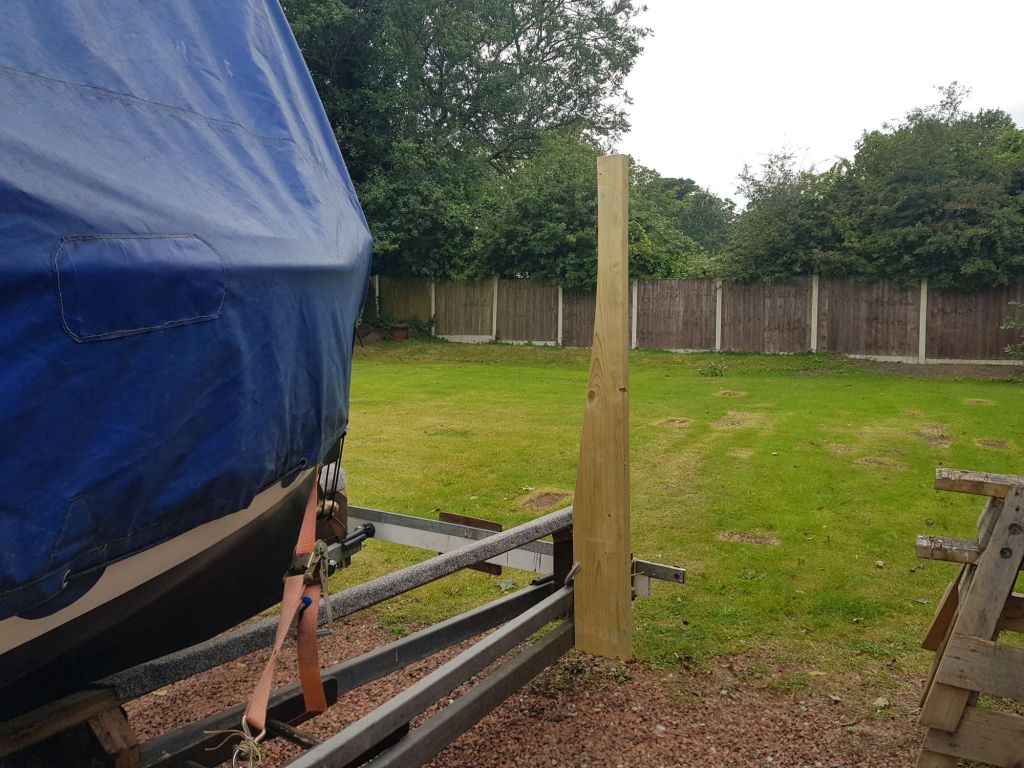
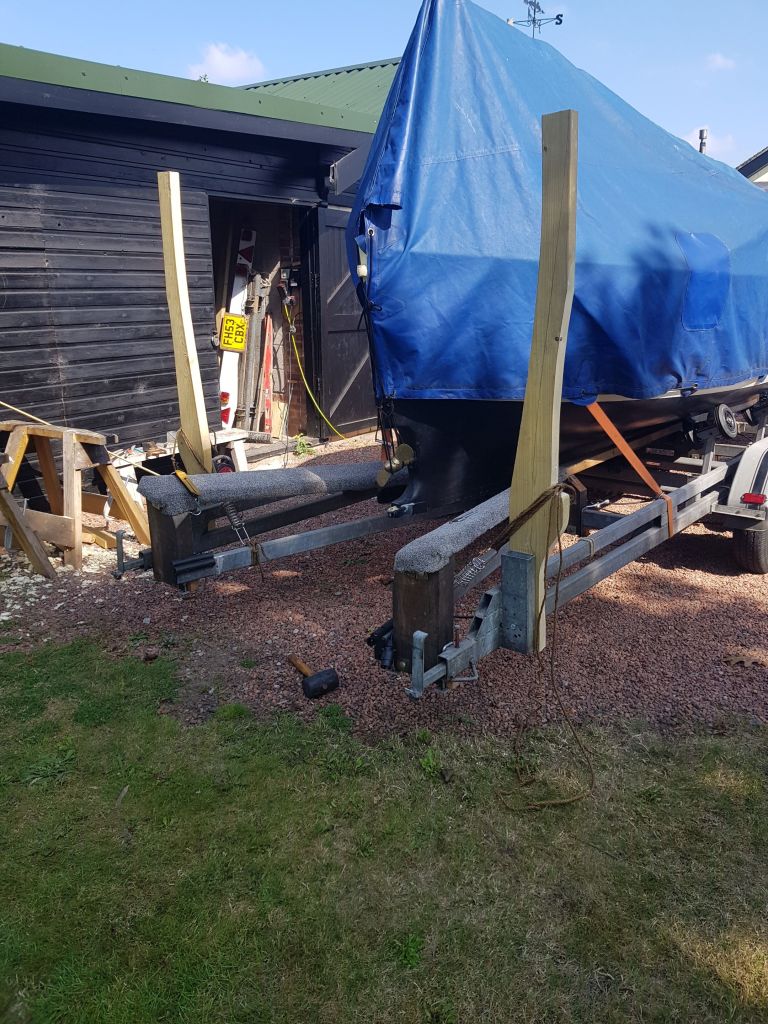
The rear of the trailer has some stout box section that could be used as a fixing point for some vertical guides. I’ve cut some wooden peices out to provide sufficient width for the hull to pass through. I’m thinking I’d like the top to have a roller feature to prevent scrapes, and some flexibility to absorb any moderate shocks.

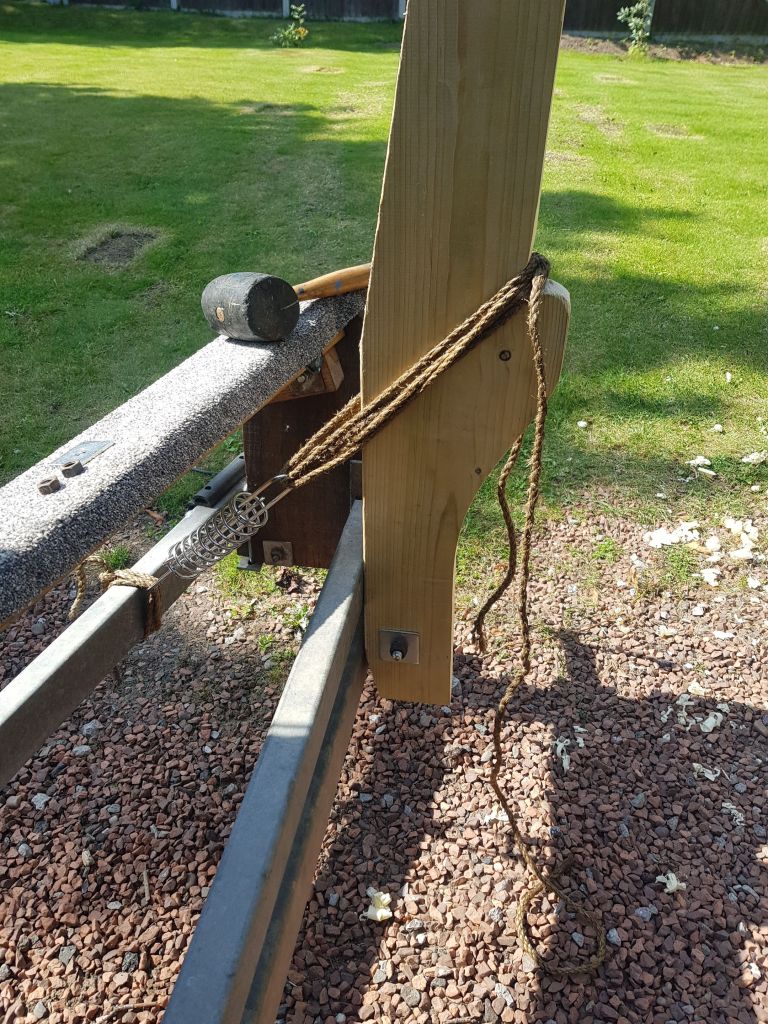
I think if I attach each arm using a single heavy bolt this will allow the pole to pivot out away from the boat. Then a spring can be used to hold the pole in its upright position tight up against the frame and to absorb any suddenw outwards movement by pre-loading the spring. An anchor spring I’m thinking that will give under load, but only up to a point. The load collapses the spring and when it is fully compressed it provides a solid stop.

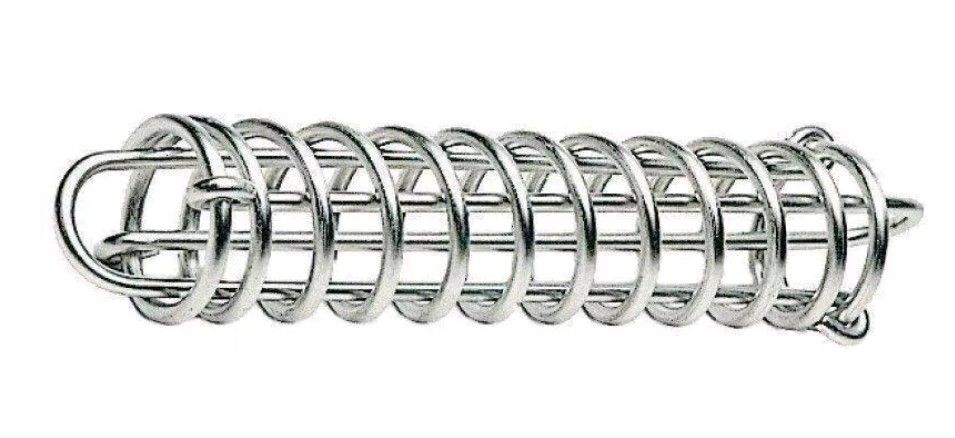
Fag packet sketch of one docking arm with spring dampers
Spring to absorb load
Temporary setup showing box section I’m thinking of using
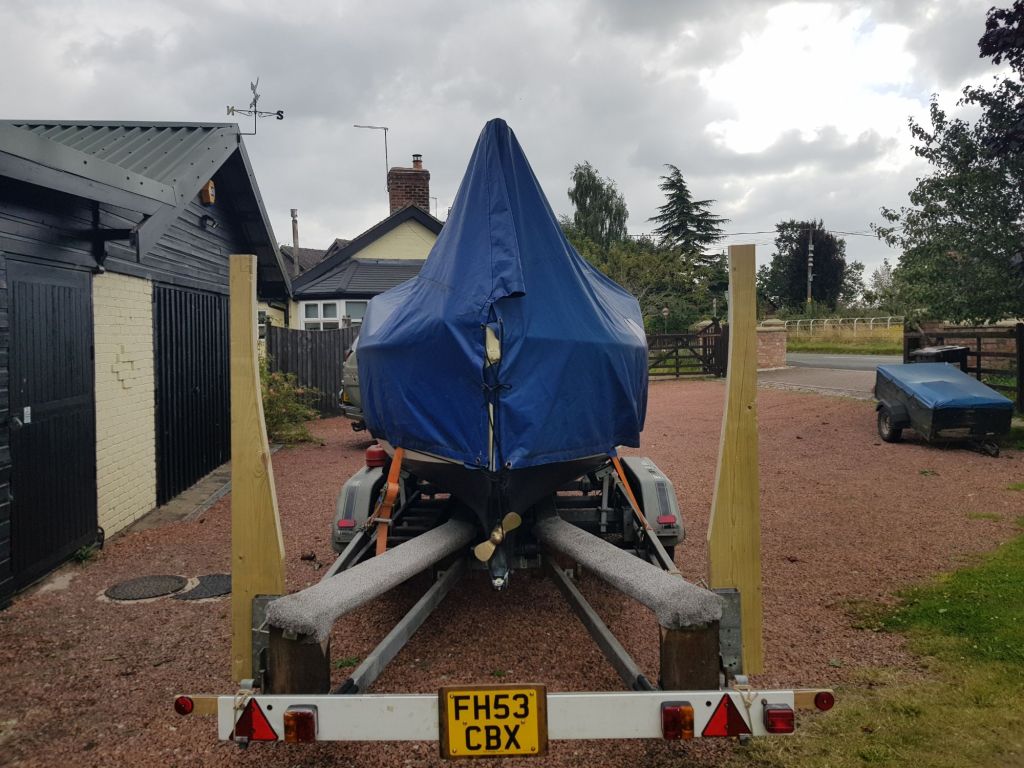
Beam is 6ft 1in which is slightly wider than the trailer frame.
Jury rigged the setup including a spring to test. I preloaded with 10kg as a start. I don’t expect any massive loads as it is only meant to be a guide. I’m thinking the pole will take up to 50kg safely.
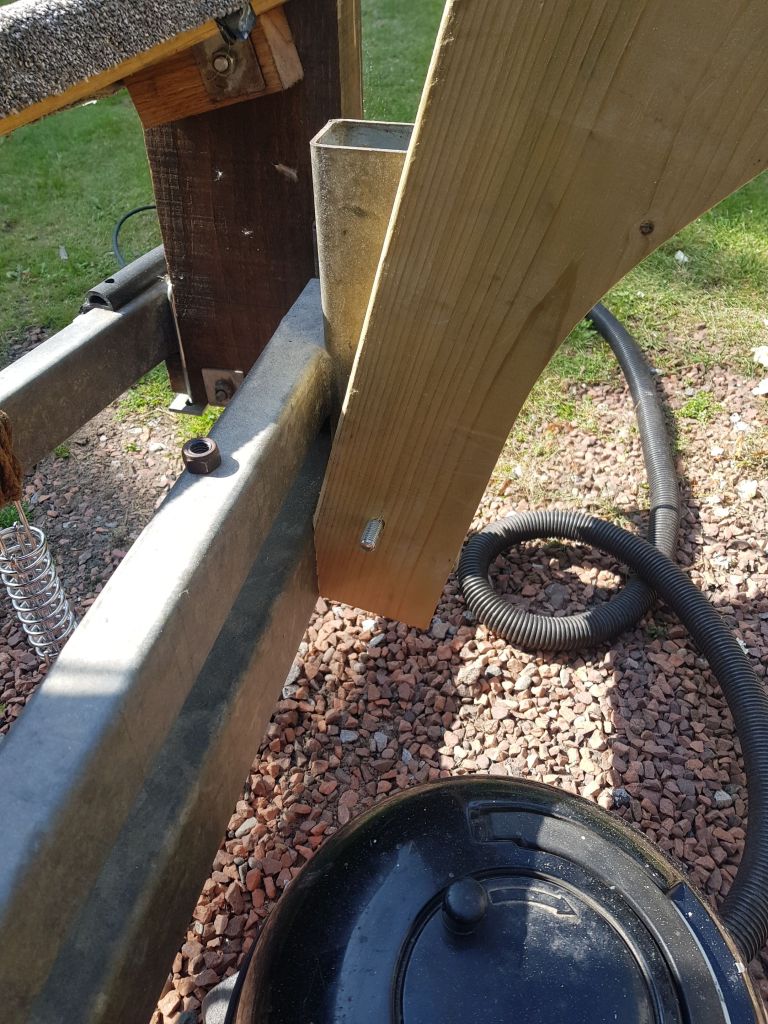
Small chamfer at base allows partial rotation up to about 30 degrees
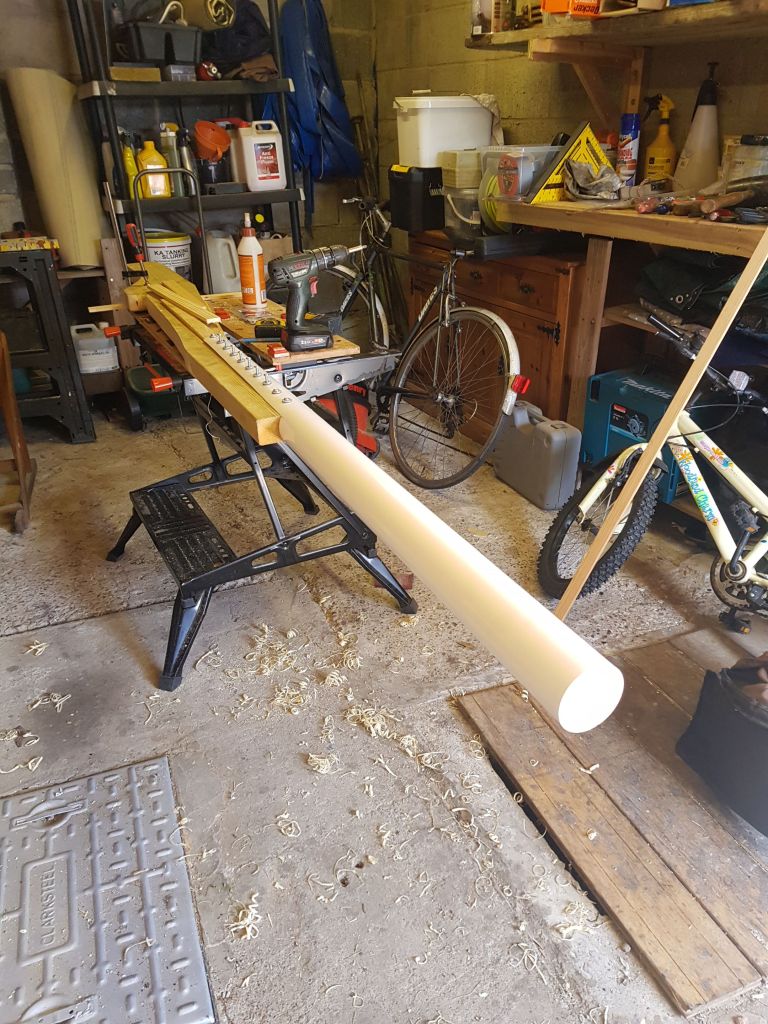
Poles thinned down to remove excess timber
Tested with 82 kg
10 kg load begins deflection then increases to 20kg at the limit of movement. At the outer limit it has been tested with eh errrm, slightly over the estimated safe working load of 50kg. Thereafter the pole it returned to its usual upright position by the spring.
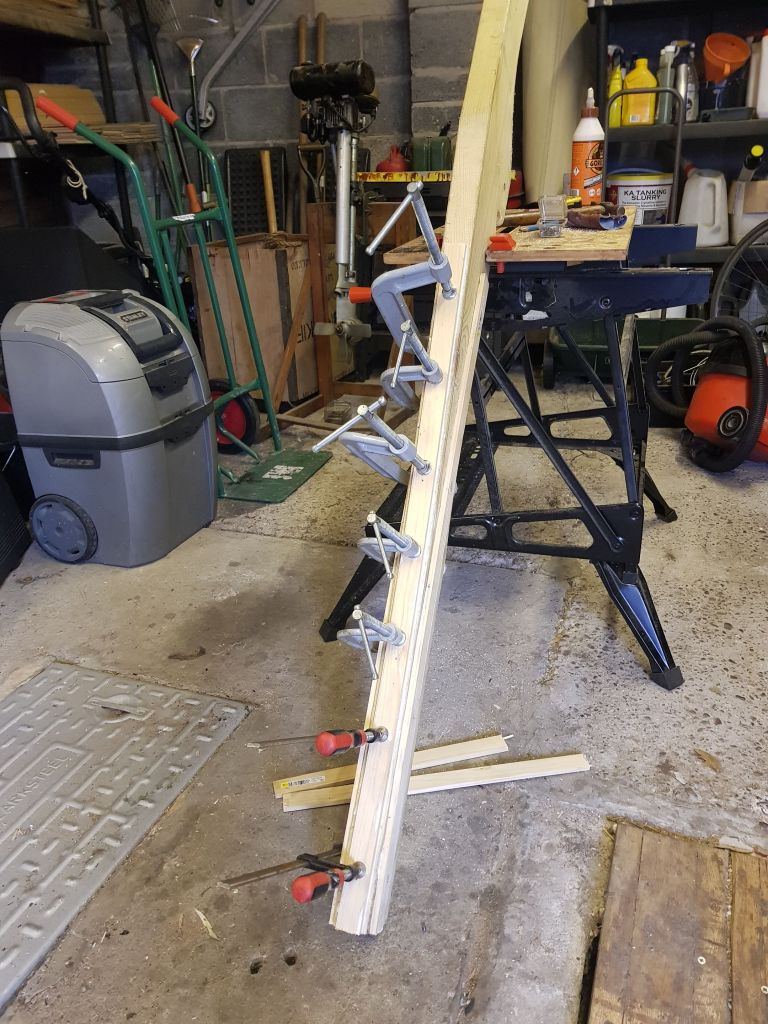
Adding strips to form seat for upper arm. Changing the design a little, rollers would be difficult to fabricate so for now I’m having a static bearer and we’ll see how that goes.
Fitting upper arms
They appear to look too far apart in this shot but its an illusion.  They are actually just a couple of inches narrower than the beam.

Leave a comment