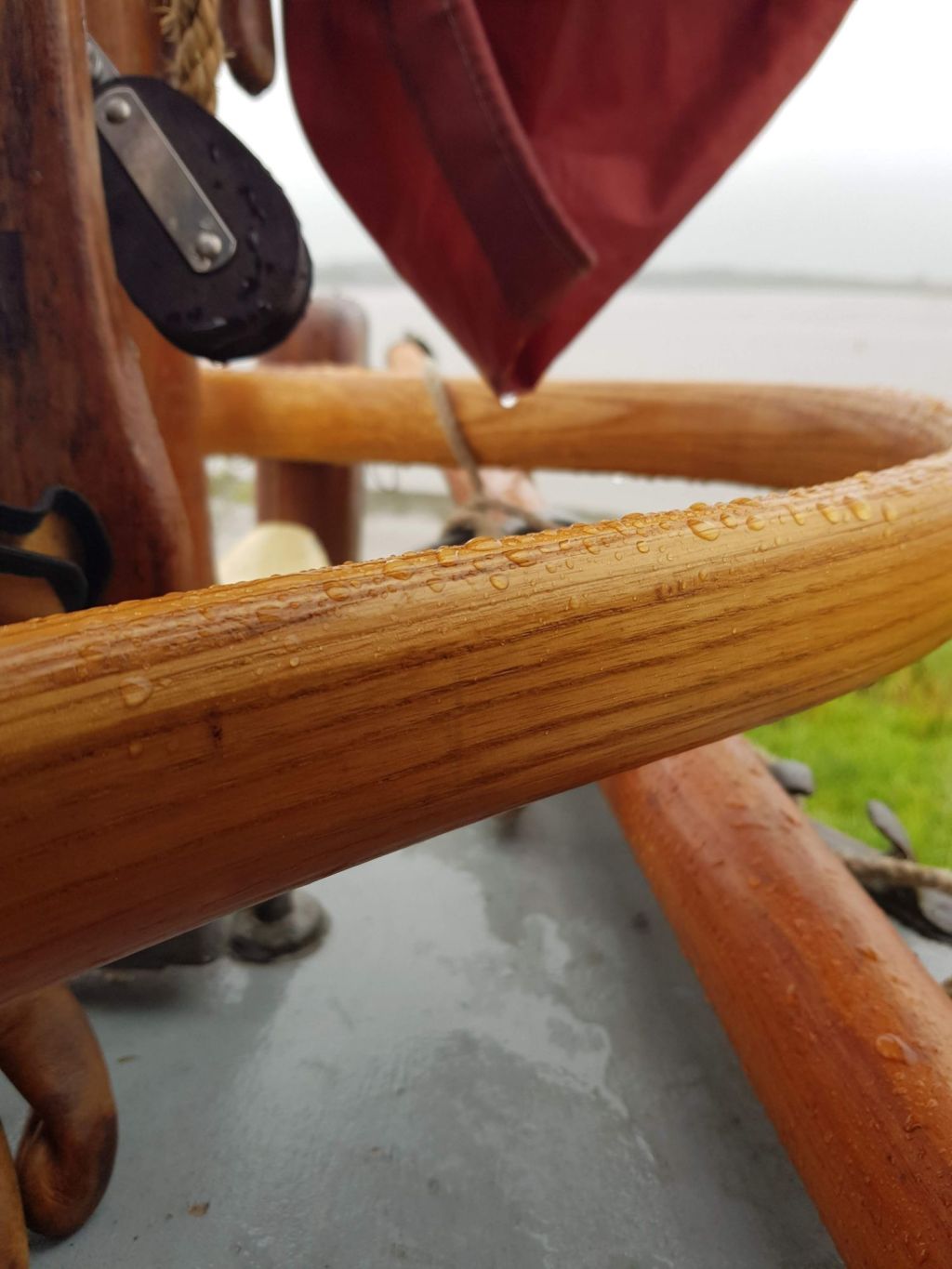
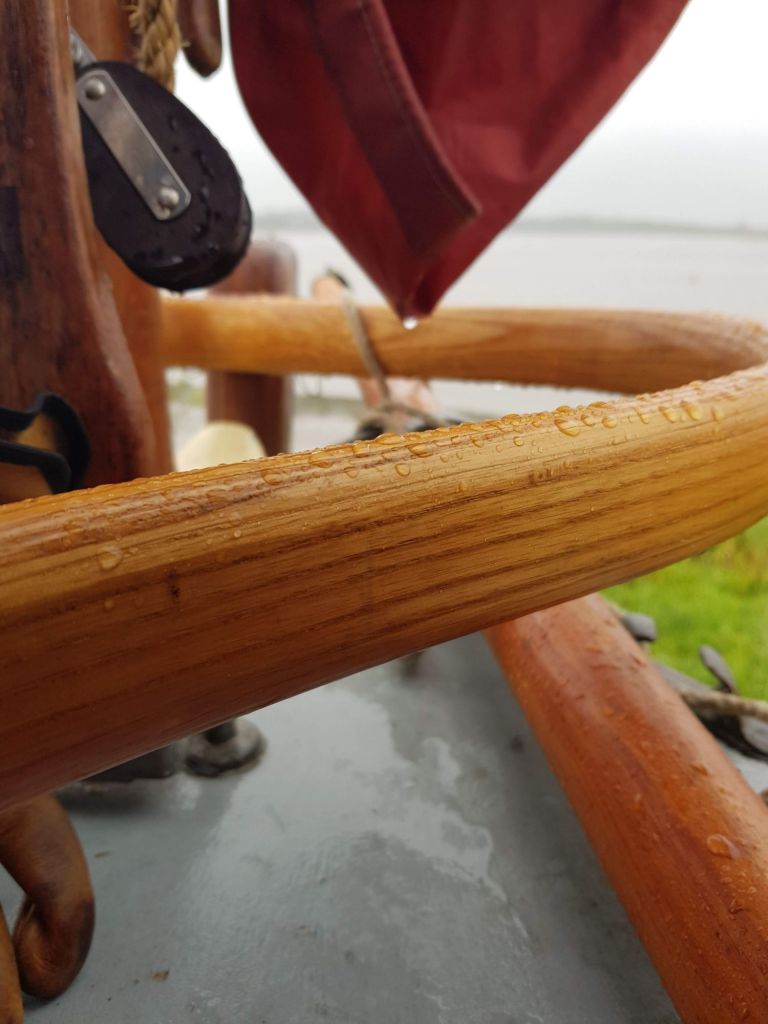
The day started out wet. There had been heavy rainfall overnight. We were snug and dry in the cabin but outside everything was soaked. Soon the overcast sky cleared and blue sky above us suddenly appeared as if by magic. The forecast was good with force 3 to 4 and waves 0.5m perfect for venturing out towards the entrance to the estuary.
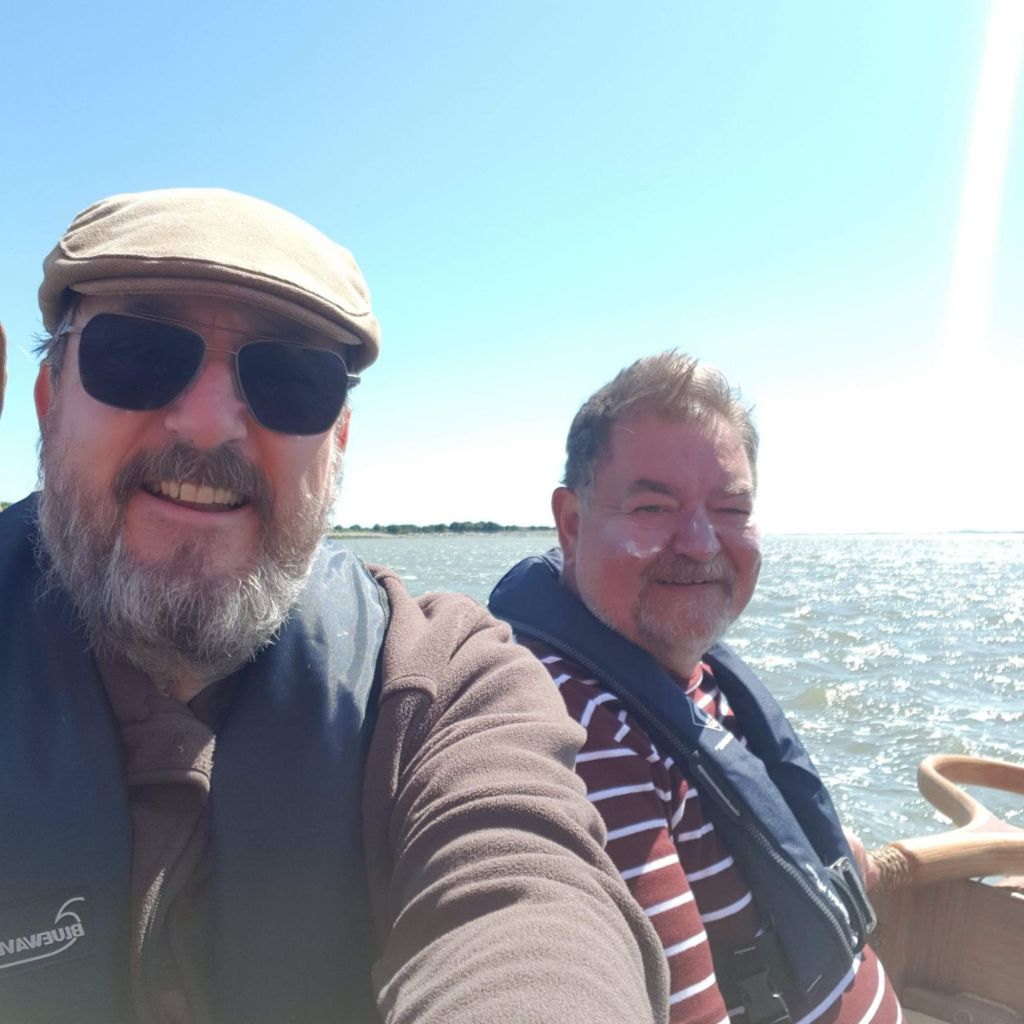
Glasson SC Commodore Doug Gorton volunteered to go out with me to pilot through the channels. Doug had been suffering a bad back and had been avoiding going sailing altogether but it seemed that conditions would be gentle enough that he didn’t want to miss the opportunity of trying out the David Moss Sea Otter in near perfect conditions.
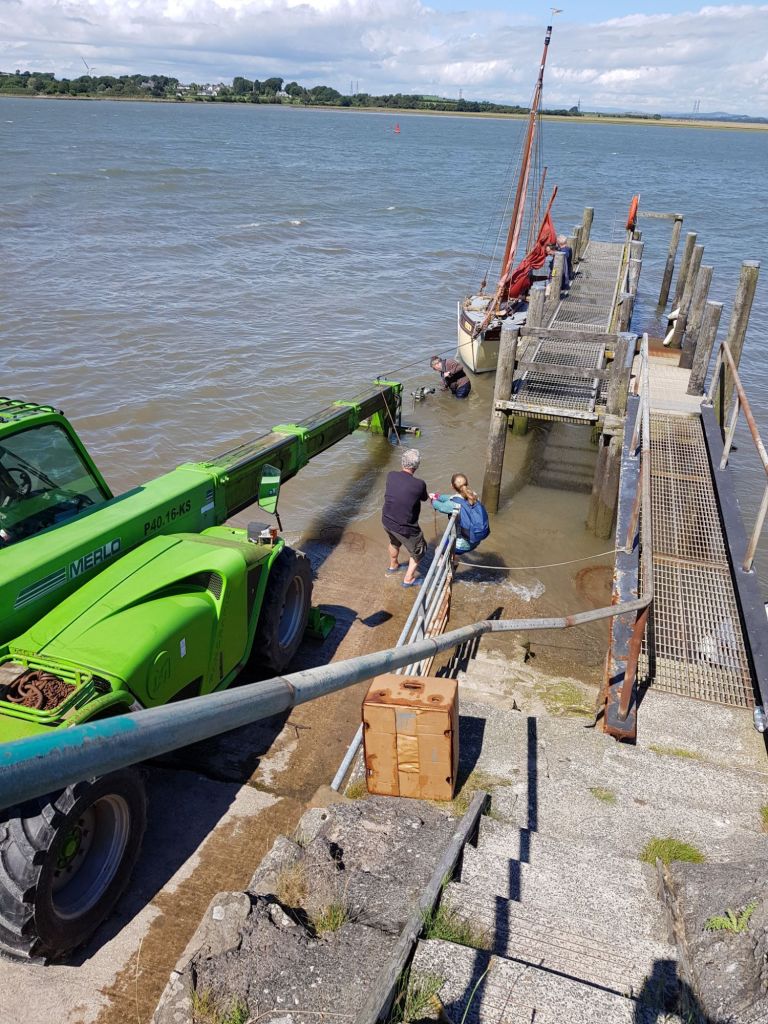
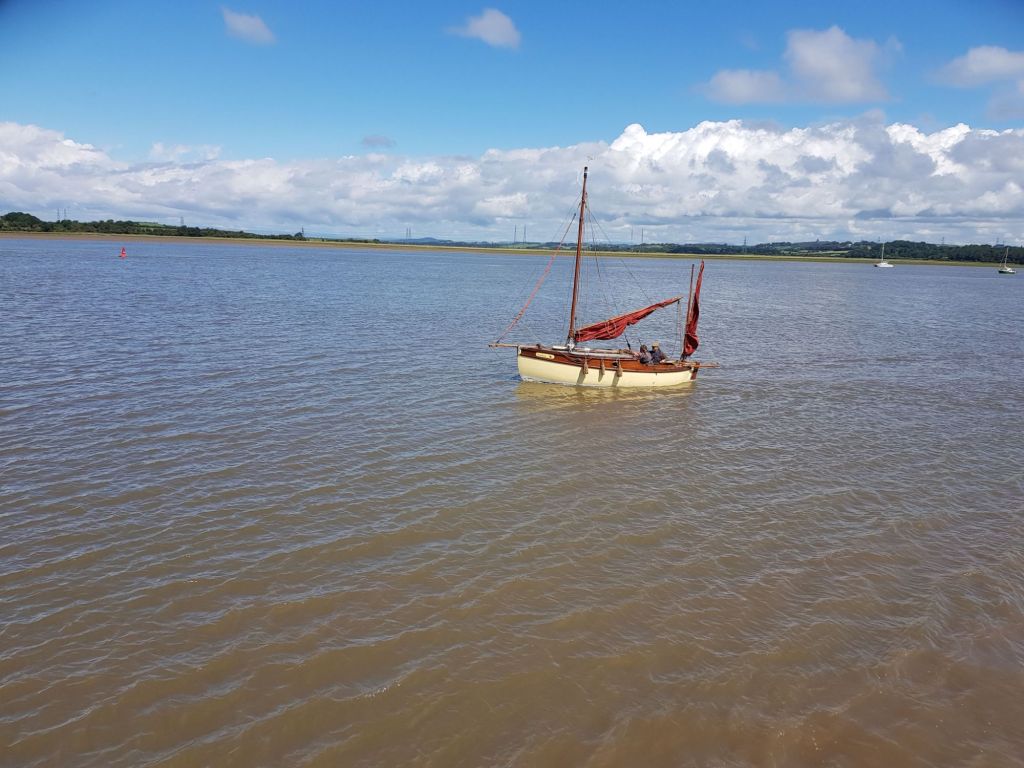
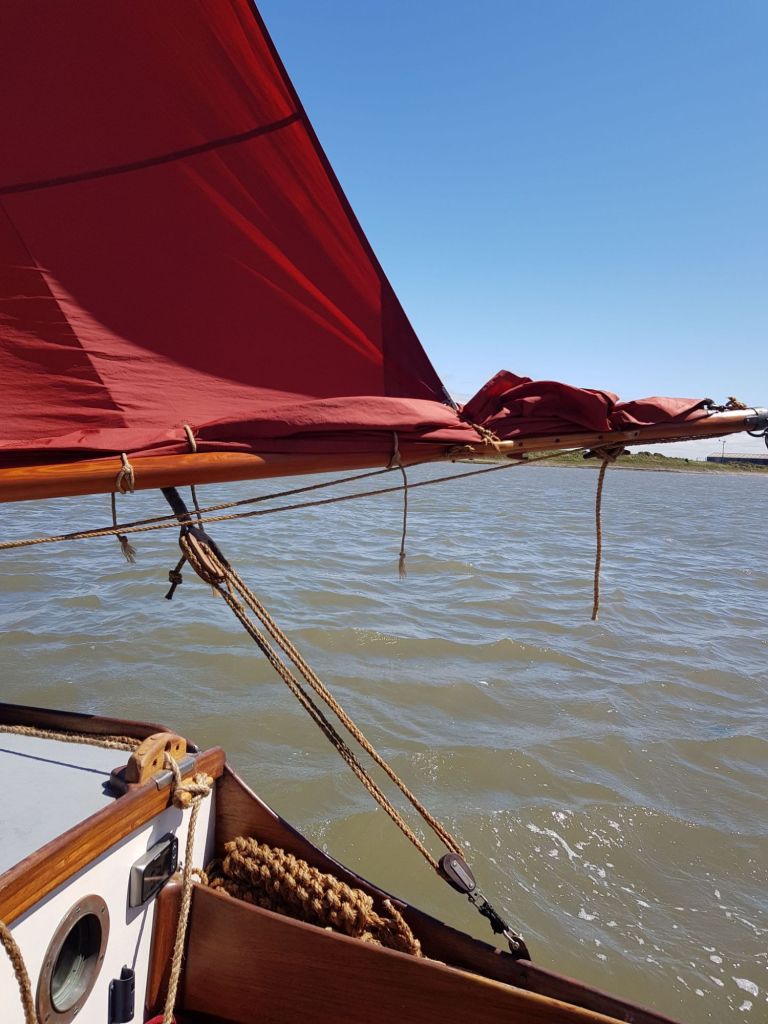
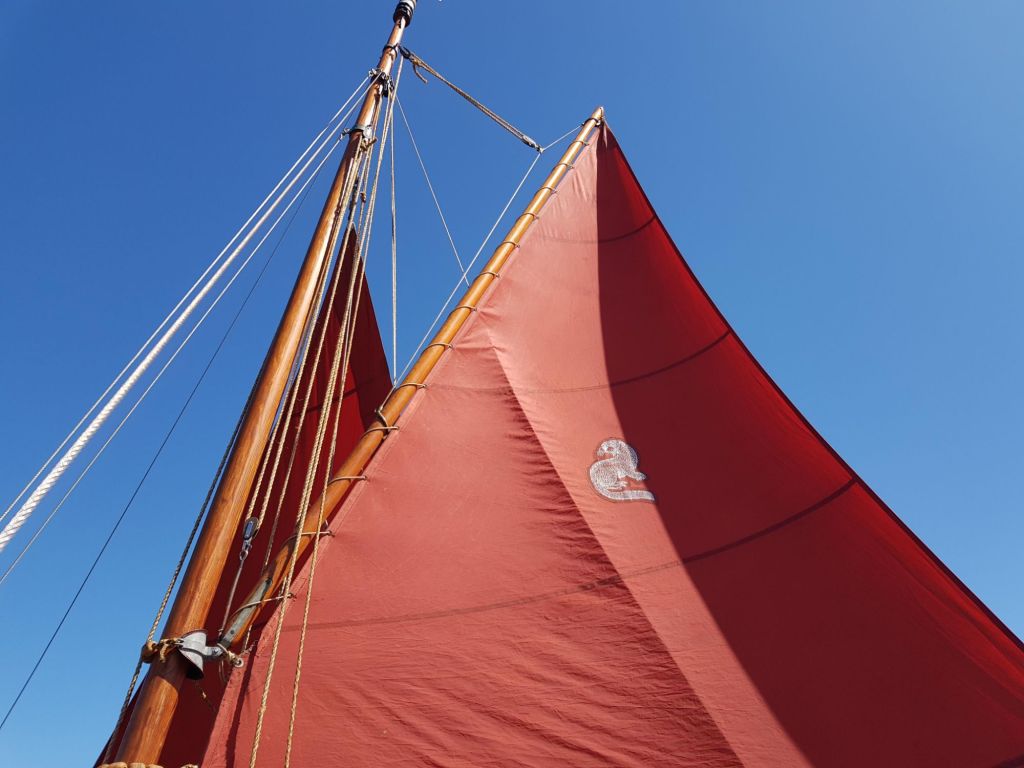
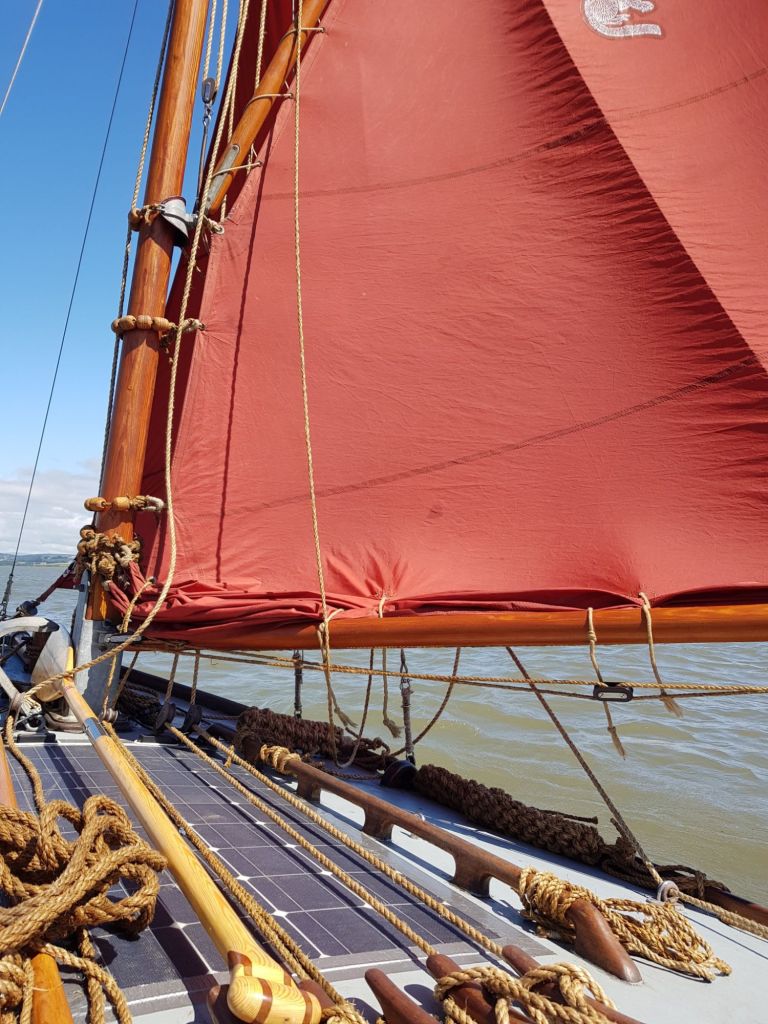
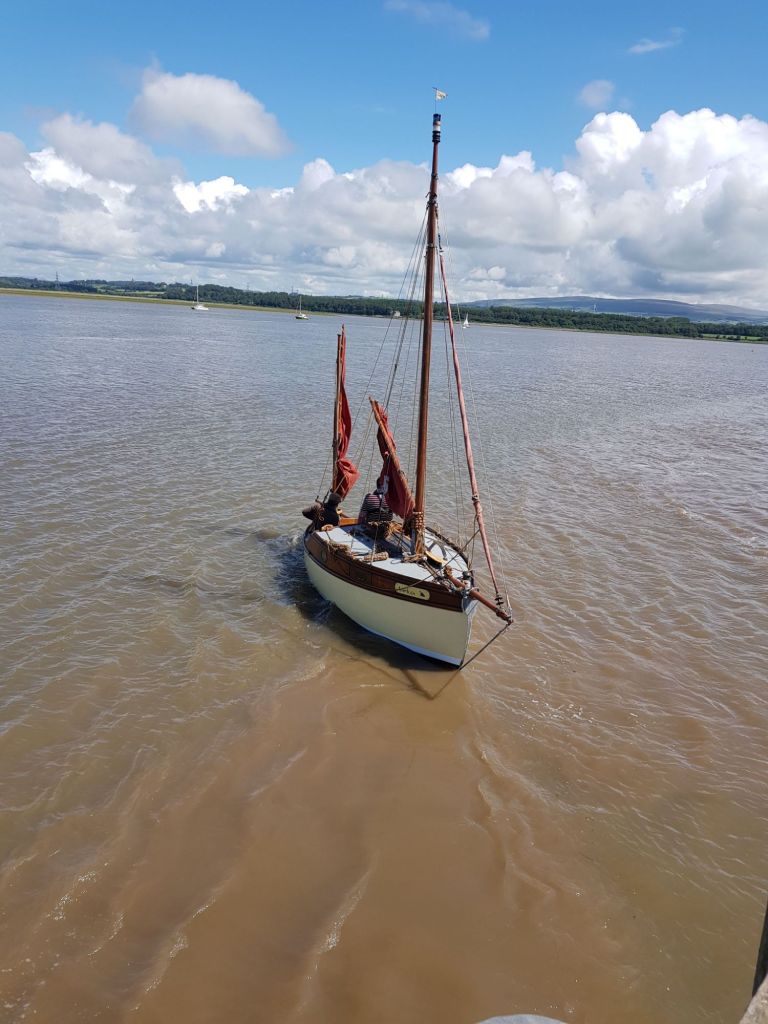
After a textbook launch we motored against the incoming tide and headed out in calm conditions. As we drew nearer the mouth of the estuary we were head to wind as we rounded the sweeping bend where Sunderland Point lies, the original port of Lancaster as was a few hundred years ago. A few old fishing hulls remain anchored in the bay. Now seemed an appropriate moment to deploy the sails so while Doug helmed I set about hosting the sails in a well rehearsed set of actions mostly performed in my mind. As of now I work full time in the week, and only get to go sailing regularly in the summer and only every other weekend. Thus most of the time I’m going through the motions in my mind wishing I was out there in reality. First release the mizzen toplift, uncleat the mizzen peak and hoist it and cleat off. Pull in the mizzen sheet hard and cleat off. Then the main, starting with 2 reefs in, haul the toplift part way and cleat off, steady with the main sheet and cleat off. Hoist the peak to about 3/4 and cleat off. Hoist the throat until the luff is tight and cleat off. Uncleat the peak, bring the peak up hard and cleat off. Uncleat the toplift and lower the boom. Uncleat the main sheet and hand to the helmsman. Uncleat the jib furler and pull out the jib sheet too unfurl and cleat off. Uncleat the mizzen sheet as we resume our heading, adjust to the point if sail and cleat off. Adjust the jib. Ease the downwind backstay…..
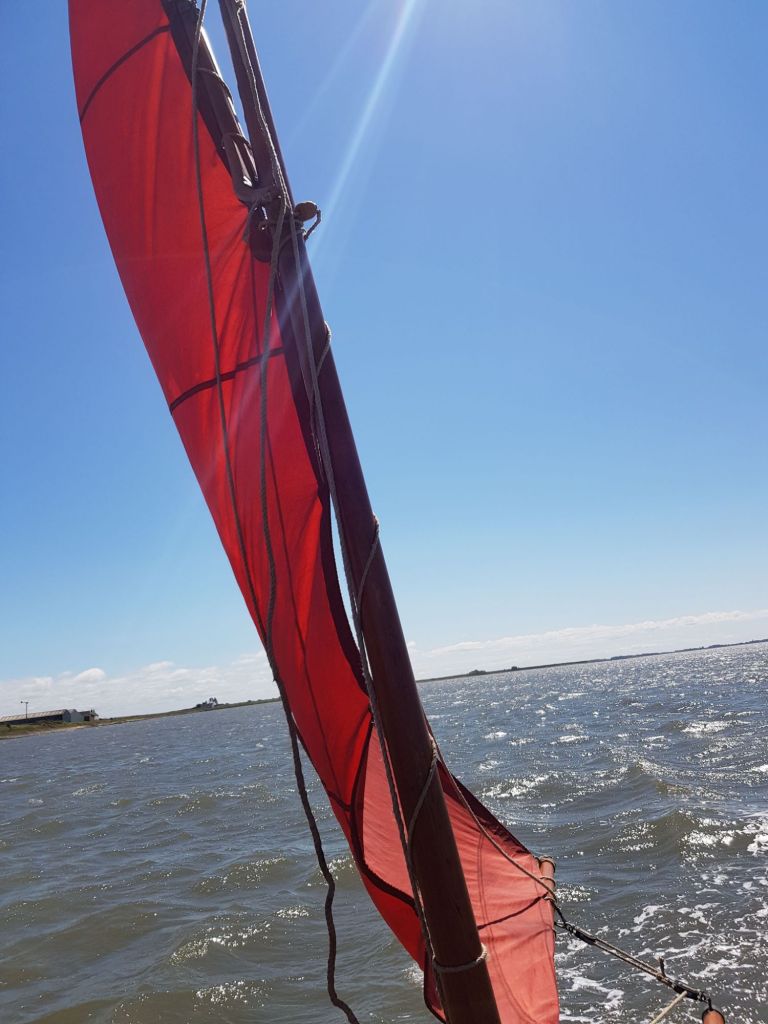
Keeping two reefs in as a safety precaution turned out to be a very fortunate decision. As we approached the mouth of the river both the wind and waves were not keeping to the forecast. The waves were more like 1m to 1.5m which seemed a bit alarming but the Sea Otter is designed to be sea friendly so I was not too worried. The wind seemed more than f4 and as we approached the lighthouse that marked the end of the sand bank jutting out from the end of Sunderland Point, I was concerned that we might get inundated by waves when we turned around to hear back in, after all the tide had turned and we needed to get back to keep enough water under the boat for the retrieve.
As we started to come about I anticipated the boat might tend to roll or wallow as we would be broadside to the waves for a short time so I prepared myself to move quickly. As we turned Doug hauled on the main as we gybed let it out again as we straightened up. I helped the boom across and pushed it out as far as it could go, releasing the backstay to free up the space needed.
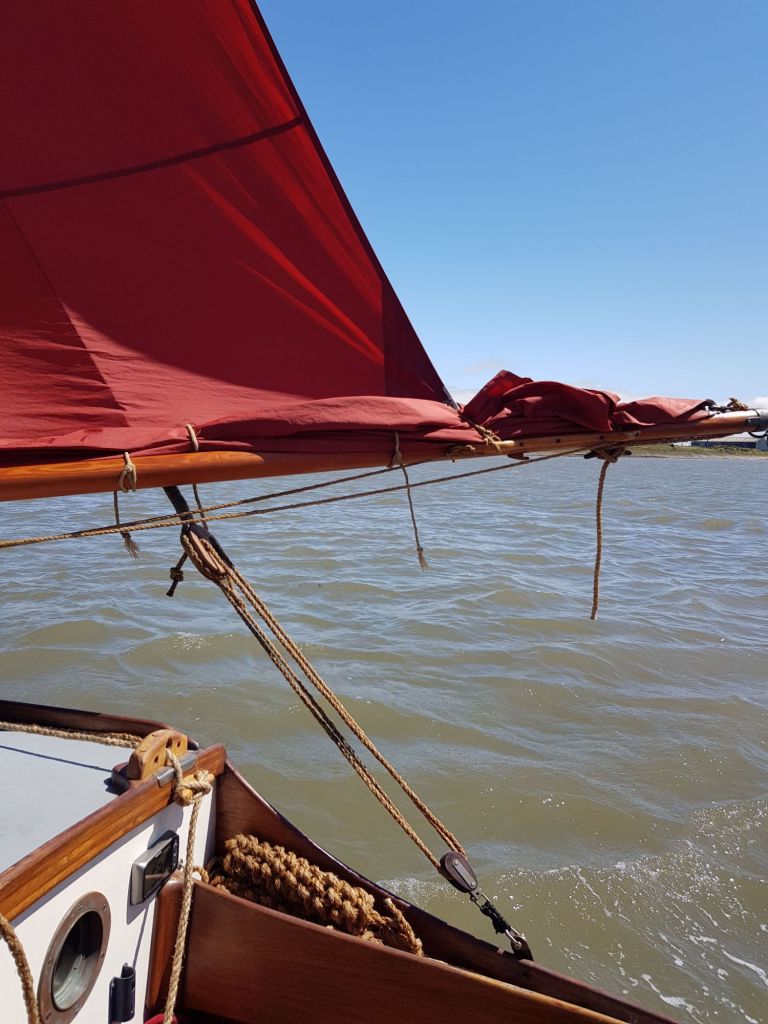
We were now running with the wind and things seemed a lot calmer. The waves were still high but instead of bashing our way through them we were now running with them. A lighter boat might have been surfing but we were just steady since the boat is canoe shape our aft is pointed like the bow so waves could simply part and move around the hull without much resistance. The only problem is the pressure on the rudder might make it more difficult to control. To me it felt safe and comfortable. To Doug I think he was under more pressure to keep the rudder under control and I think I did hear him swear a couple of times. The main sail was also really under a lot of strain and Doug pointed out that I had tied the reefing points around the boom whereas really I should have just gathered the sail material up and tied it to itself to keep the foot loose. My bad, another lesson learned. Later Doug would suggest I had a third set of reefing points put in and on inspection afterwards I saw the sail suffered a tear around the 2nd reefing cringle, so after today’s adventure I sent all the sails off to Jeckells for service, repair and a third role of reefing points.
There was only one other memorable event of the day. As we approached the slipway the wind suddenly changed direction and we had an accidental gybe. I think Doug must have been expecting it to happen being more familiar with the localised weather pattern near the club. It was down the the proximity of higher ground and the buildings in Glasson Dock, he said. At any rate I heard Doug scream “Gybe!” and since I had been sitting down anyway I leant forward to lower my head as I felt the boom sweep fully across the boat onto the other side, I swear I felt something brushing the back of my head as it went. It was probably some of the rolled up sail or the reefing lines but even so, caution and extra awareness is needed at all times since the boom, or ‘widowmaker’ as it is known takes no prisoners.







 Small Boat Voyages
Leave a comment